Ball pythons shed every few weeks, and the quality of each shed comes down almost entirely to moisture. Hold ambient humidity between 60 and 80%, with a humid hide always available, and most snakes slip out of their old skin in a single, inside-out piece. Drop too low, and you start seeing torn fragments, cloudy eyes that clear too slowly, and skin that binds at the tail tip. Go too high without good airflow, and scale rot follows. Getting the number right is genuinely the whole job.
This guide covers what humidity to aim for (and why the sources disagree by more than you might expect), how to raise it without creating a mold problem, what each stage of a healthy shed looks like, and what to do when things go wrong. For a deeper look at any subtopic, the linked articles below go further than this one will.
What humidity should a ball python have, and why the numbers vary
If you search for ball python humidity, you will see a wide spread: some guides say 50-60%, others say 60-80%, a few push 80% or higher. The gap is not a mistake. It reflects two different things being measured: what the snake's ambient air should read versus what the wild habitat actually records.
ReptiFiles bases its range on climate data from West and Central Africa, where Python regius is native. Those records show daytime humidity of 60-80%, rising to 80-100% at night. That is the ceiling of the natural range, not the floor. Sources recommending 50-60% are giving you a safe working minimum for a glass-fronted enclosure with decent airflow. Both are defensible; they just have different goals.
For a practical keeper target: keep your ambient reading (mid-enclosure, digital probe hygrometer) between 60 and 70% during ordinary days. Let it climb to 70-80% during the shed window. The important check is the floor, chronic readings below 55% are the main driver of incomplete sheds and retained eye caps, according to VCA Animal Hospitals, which lists low humidity, low temperature, and poor nutrition as the most common causes of dysecdysis (difficult shedding) in pet snakes.
Where sources disagree on the upper end during shedding (some say 70%, others say 80-90%), the answer is that the humid hide handles the difference. Your ambient air does not need to read 85% if the snake has access to a pocket of 90%+ inside a damp moss box. For a full breakdown of the numbers and how to dial them in for your specific setup, see our dedicated guide to ball python humidity levels.
The humidity and shed cheat sheet
The reference table below consolidates situation, target, and action into one place, so you are not hunting through paragraphs mid-shed.
| Situation | Target humidity (ambient) | Humid hide | Main action |
|---|---|---|---|
| Normal day, no shed signs | 60-70% | Always available, damp moss refreshed weekly | Monitor with digital hygrometer; spot-mist if reading drops below 55% |
| Shed starting (eyes going blue/dull) | 65-75% | Refresh moss now; confirm hide is damp | Optional: light mist of substrate in the evening; do not handle |
| Eyes clear again, snake restless | 65-75% | Keep damp, actual shed is 1-3 days away | Provide a rough surface (cork bark, smooth rock) for the snake to rub against |
| Shed complete | Return to 60-70% | Check moss for mold; replace if needed | Inspect shed for two eye caps and a continuous tail tip; see vet if caps missing |
| Dry climate / low ambient (under 50%) | Raise to 60-70% | Extra-damp moss; consider second hide with moss | Switch to moisture-retaining substrate (coco fiber, cypress mulch) if glass enclosure dries fast |
| Pre-shed stage (blue) | 65-75% | Critical, do not let it dry out | Leave the snake alone; blue phase lasts 2-4 days; eyes will clear on their own |
| Shed in progress | 65-75% | Damp | Do not assist or handle; the actual skin removal takes roughly 10 minutes |
| Shed done, skin found in pieces | Raise to 70-80% next cycle | Increase moss moisture | Check for retained skin on tail tip and over eyes; if retained, see the stuck shed and eye caps guide |
How to raise humidity without creating mold
Mold and excess moisture share one root cause: stagnant wet air with no airflow. The fix is to hold moisture in substrate and hides while keeping air moving across the top of the enclosure.
Start with substrate. Cypress mulch, coconut coir, and sphagnum moss all hold water well without collapsing into a wet mat. Aim for 3-4 inches of depth. Deeper substrate releases moisture slowly and buffers the enclosure against sudden drops when the room air is dry. Reptile carpet and paper towels do not contribute to humidity at all, which makes them a poor choice for snakes in dry climates.
Misting helps in short bursts. Evening is the better time, cooler air holds moisture longer, so you get more benefit per spray. Limit it to once a day at most, and mist the walls and substrate rather than spraying directly on the snake. Overdoing it without drainage turns into a respiratory infection waiting to happen.
A large water bowl placed on the warm side of the enclosure adds passive humidity through evaporation. Moving it closer to the heat source raises evaporation; moving it to the cool side reduces it. That small adjustment is often enough to pull readings from 58% to 65% without any misting at all.
Ventilation matters as much as moisture input. A screen-top glass tank loses humidity fast, particularly in dry winters. Covering a portion of the screen with aluminum foil or a damp towel slows evaporation enough to keep readings stable. PVC enclosures retain moisture far better than glass for the same reason.
For a practical step-by-step on all of these methods, the guide to raising ball python humidity goes into specific products and enclosure-type adjustments.
The humid hide: one piece of kit worth building
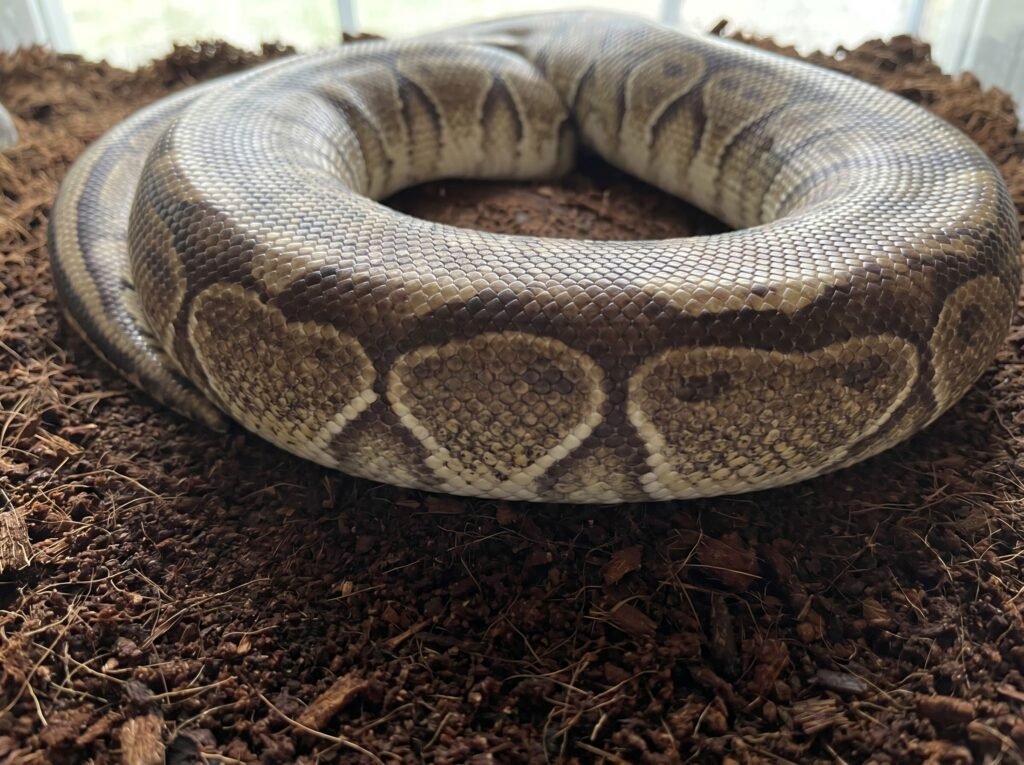
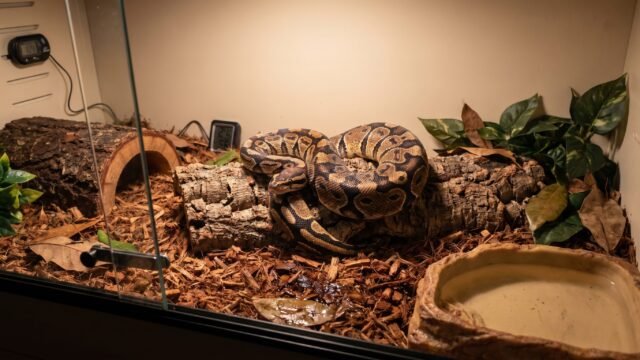
A humid hide is a small, enclosed box filled with damp sphagnum moss that the snake can enter whenever it wants more moisture than the ambient air provides. ReptiFiles recommends placing one on the cool side of the enclosure, lined with moistened sphagnum moss, checked and changed regularly to prevent mold.
Any opaque plastic container with a hole cut in the lid works. The opening should be just large enough for the snake to enter, a snug fit matters because ball pythons are a species that actively seeks tight spaces for security. Too large and it functions as just another open hide, not a microclimate.
Keep the moss damp but not sopping. Squeeze it out before placing it so it holds moisture without pooling water. Check it every 4-5 days. If it starts to smell sour or show white fuzz, replace it immediately. A moldy hide is worse than no humid hide.
During the shed window, the humid hide is the most important thing you can provide. The snake knows to use it, and a fresh-moss hide often resolves marginal humidity conditions entirely. Our full ball python humid hide guide covers sizing, placement, and moss options in detail.
What a healthy shed looks like, and when it happens
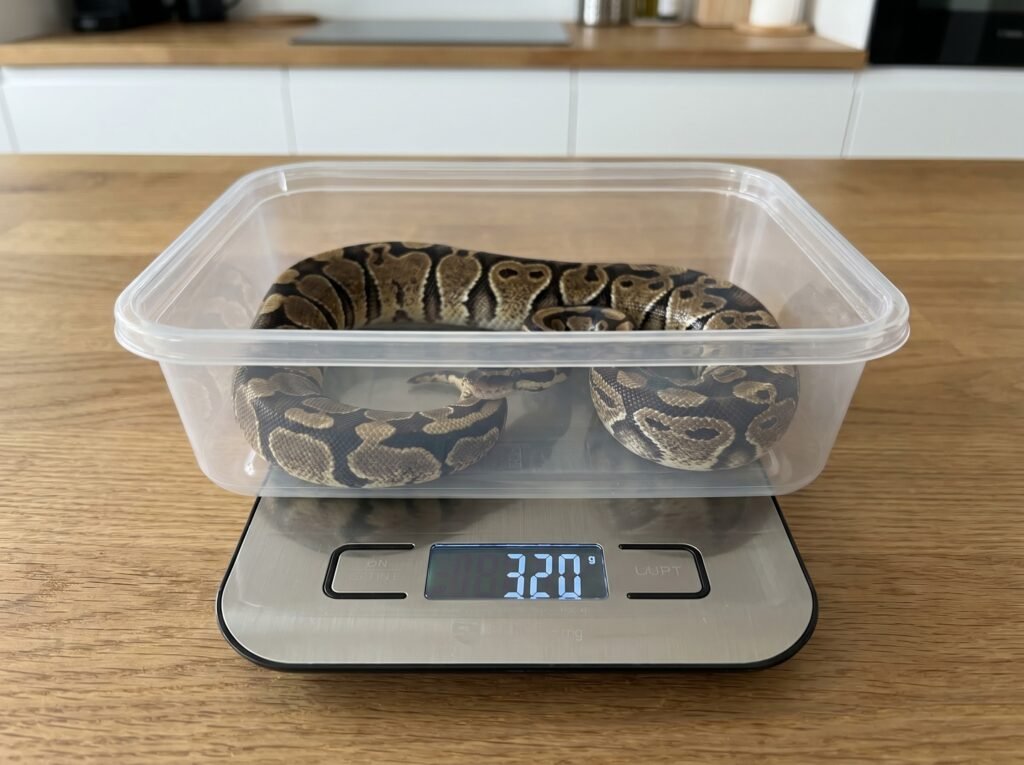
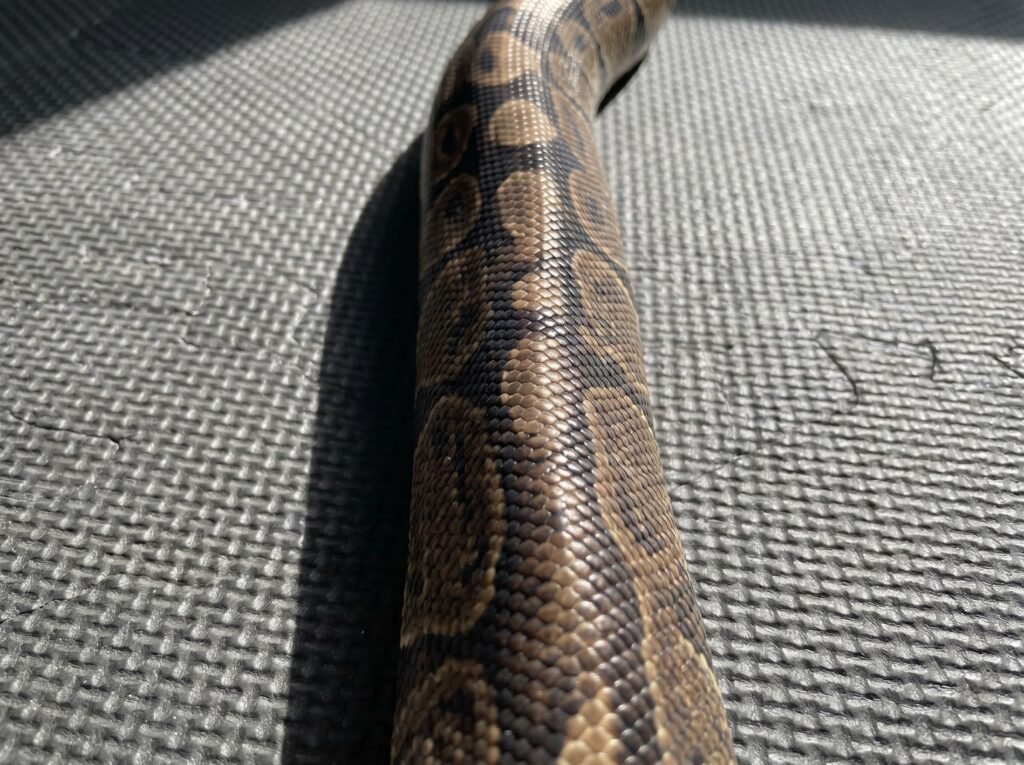
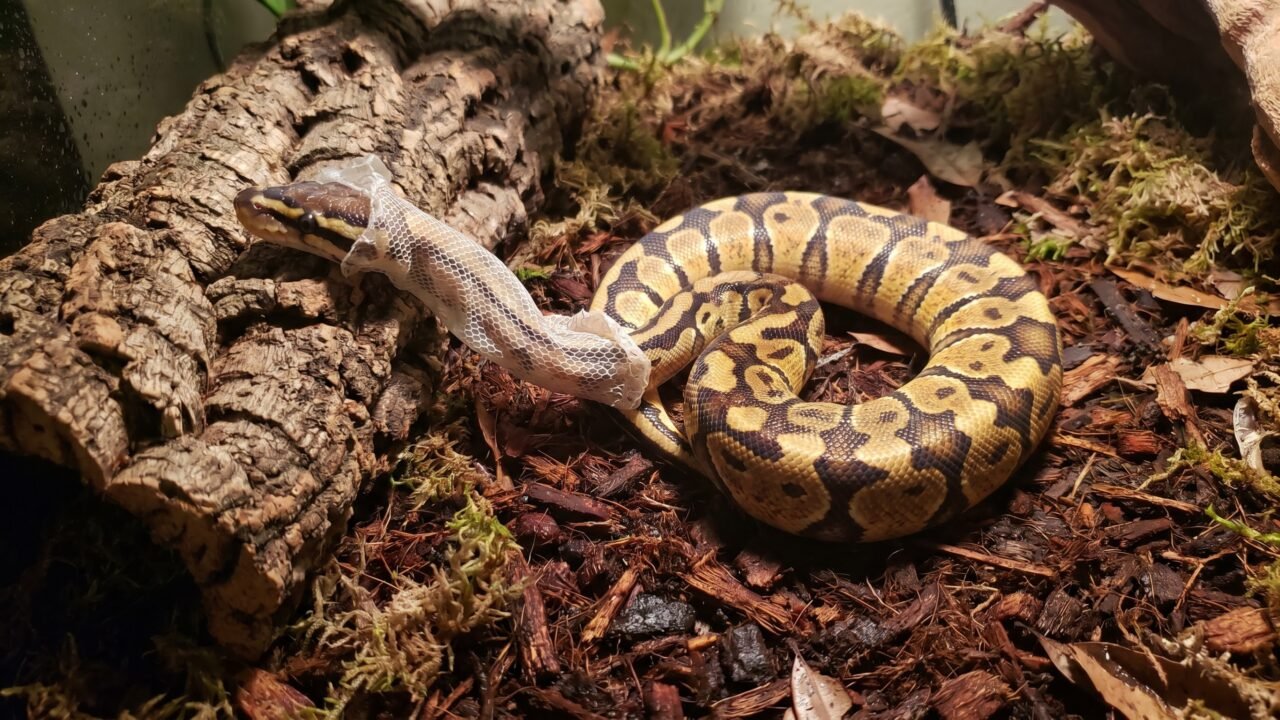
A healthy shed comes off in a single piece, inside-out, from nose to tail tip. The skin looks slightly longer than the snake and retains a faint pattern, the new skin underneath is noticeably brighter and more vivid. Two small circular pieces at the front of the shed are the eye caps (spectacles). Finding them means the shed was complete. Missing caps are a problem that needs attention promptly, because retained spectacles can lead to permanent eye damage. See the stuck shed and eye cap guide for what to do.
Sheds that come off in multiple pieces, leave dry patches behind, or cling at the tail tip all point to insufficient humidity during the build-up phase.
The full process from first dull skin to finished shed takes 10-14 days according to Terrarium Quest's shedding guide. It moves through two visible stages:
- Pre-shed (the blue phase): The skin dulls, then the eyes turn a cloudy blue-gray as fluid builds between the old and new skin layers. This phase runs 2-4 days. The snake often refuses food, moves less, and hides more. All of that is normal.
- Clearing and shed: The eyes clear back to normal, sometimes looking almost shiny. The snake usually sheds within 1-3 days after the eyes clear. The actual skin removal takes about 10 minutes once the snake finds a rough surface to anchor against.
For a deeper look at each stage and what to watch for, see what a healthy ball python shed looks like.
How often do ball pythons shed
Age and growth rate drive frequency. Young ball pythons grow fast and shed roughly every 3-4 weeks. VCA Animal Hospitals notes that a young, healthy, well-fed snake may shed as often as once a month. Adults slow down considerably, typically shedding every 4-6 weeks, and sometimes longer in slow-growth periods.
A ball python that stops shedding entirely for several months is worth a closer look. Chronic dehydration, low temperatures, illness, and prolonged fasting can all suppress the shed cycle. The snake's skin looks dull and may wrinkle slightly when you lift a fold. That is the sign of a keeper issue rather than a calendar issue.
Full frequency ranges, age benchmarks, and the effect of feeding rate on shedding are all in how often do ball pythons shed.
When to call a reptile vet
Improve humidity, offer a warm soak (shallow water at about 85°F for 20-30 minutes), and check the hide before assuming the worst. Most stuck sheds resolve with those steps.
See a reptile-experienced vet if:
- Retained skin has been on the snake for more than a few days after attempts to increase humidity and soak
- You cannot confirm both eye caps came off and the eyes look sunken or abnormal
- The snake has had incomplete sheds across two or more consecutive cycles
- You notice blistering, discolored, or raised scales alongside the shedding trouble (possible scale rot or infection)
VCA Animal Hospitals is direct on this point: if the problem persists after environmental improvements, consult an experienced reptile veterinarian promptly to prevent permanent damage. Retained spectacles left untreated can cause blindness.