Most ball python health problems show up first as small, easy-to-miss changes: a different posture, a patch of odd-looking scales, a slightly runny nose. Catch them early and husbandry fixes or a single vet visit usually resolve things. Miss them for weeks and a minor issue can turn serious. This hub page walks you through the six most common conditions, what to watch for, how to prevent each one, and when to stop watching and call a reptile vet instead.
Note: This article is not veterinary advice. It covers signs and prevention only. For diagnosis, dosing, or treatment decisions, consult a licensed reptile or exotic-animal veterinarian.
The six most common ball python health problems at a glance
The table below links each condition to the full spoke article where you can go deeper.
| Condition | Earliest sign to notice | Primary prevention | See a vet? |
|---|---|---|---|
| Scale rot | Reddish or discolored patches on belly scales; small blisters | Keep humidity around 60%, substrate dry, enclosure clean | Yes. Early cases need topical care; advanced cases need antibiotics |
| Mites | Tiny moving dots (often near eyes or under chin); soaking more than usual; rough-looking scales | Quarantine all new animals; inspect every purchase; use clean substrate | Yes. A vet identifies the species and advises safe treatment |
| Respiratory infection | Mucus at mouth or nostrils; clicking or wheezing sounds; open-mouth breathing | Warm side at 88-92°F, no cold drafts, low stress, clean enclosure | Yes. Bacterial RI needs antibiotics; act within a day or two |
| Mouth rot (stomatitis) | Tiny reddish-purple spots on gums; thick or bloody mucus; swollen jaw; sour smell from the head | Prevent mouth injuries; maintain correct temps and hygiene | Yes. Requires professional cleaning and often injectable antibiotics |
| Retained shed | Patchy or incomplete shed; dull cloudy eyes that do not clear after shed; skin bands on tail tip | Keep humidity near 60%, rising to ~70% during shed; provide a humid hide | Yes if eyecaps are retained or skin restricts blood flow to the tail |
| Over- or underweight | Barrel-round cross-section with fat pockets near the vent (over); visible spine ridge, sunken belly (under) | Feed prey no wider than 1-1.5x the snake's mid-body; track weight monthly | Yes if weight loss is sudden, unexplained, or paired with other symptoms |
Why husbandry prevents most problems
Ball pythons are hardy animals. The bulk of health problems seen in captivity trace back to enclosure conditions that are too cold, too wet, too dry, too small, or chronically stressful. Fix the environment and you remove the root cause for most of the list above.
A few baselines worth treating as non-negotiable:
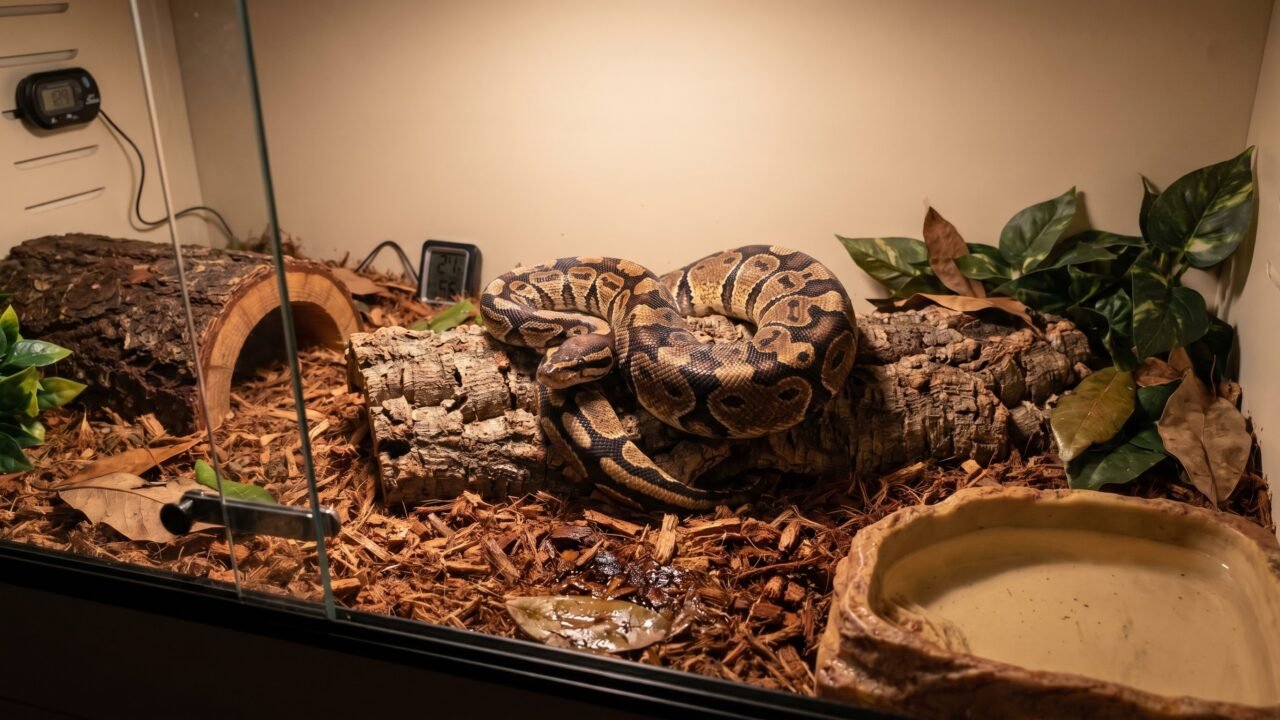
- Warm hide surface: 88-92°F. Cool side ambient: 75-80°F. Every heat source on a thermostat, full stop.
- No heat rocks. Burns develop under scales before you can see them.
- Adult enclosure at least 4 ft x 2 ft of floor space. Cramped conditions raise stress, and stress suppresses immune function.
- Baseline humidity around 60%. Boost toward 70% when your snake goes into shed. A humid hide filled with damp sphagnum moss lets the snake self-regulate.
- Feed frozen-thawed prey. Live rodents can bite and inflict serious wounds, as VCA Animal Hospitals notes.
Ball pythons do not brumate. If yours goes off food in winter, that is usually a seasonal slow-down. Persistent refusal combined with weight loss or other signs is different. Read more in our guide on what is normal vs. an emergency.
Scale rot: the humidity-and-hygiene issue
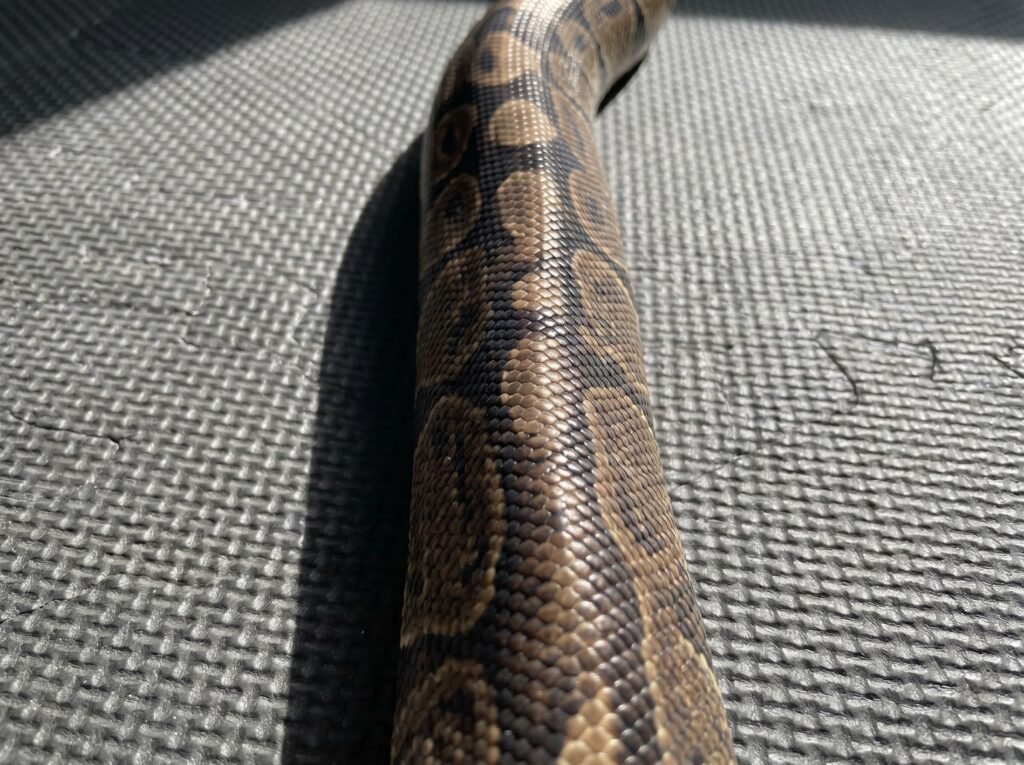
Scale rot (ulcerative dermatitis) starts as reddish discoloration or small blisters on the belly. It develops when the enclosure floor is too wet for too long. The Merck Veterinary Manual notes that moist, contaminated bedding allows bacteria and fungi to grow, and that in ball pythons specifically, hemorrhage into scales precedes pustule formation and eventually open ulcers. Secondary infection with Aeromonas or Pseudomonas can progress to septicemia if the case is left untreated.
Prevention is straightforward: keep the enclosure floor dry between water bowl spills, spot-clean immediately, and control humidity with a thermostat and a hygrometer rather than guesswork. The full breakdown of signs and what to do lives in our scale rot spoke article.
Mites: small parasite, outsized consequences
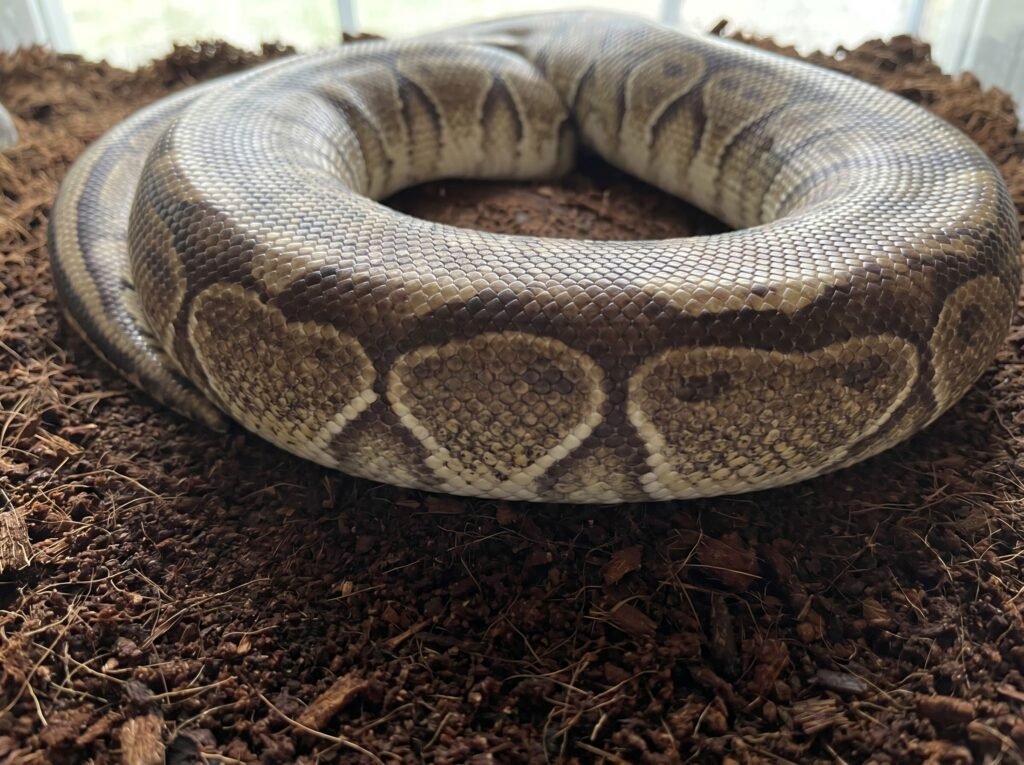
Snake mites are tiny, roughly 1 mm or less, and they hide well under scales and along jaw edges. An infested snake often soaks in its water bowl more than usual, because mites dislike immersion. Look for tiny moving dots around the eyes, chin, and under the chin groove. In heavy infestations, the Merck Veterinary Manual reports that blood loss can cause anemia, and mites also carry bacterial and viral diseases between animals.
The single best prevention step is strict quarantine. Every new snake, including those from reputable breeders, goes into a separate room for at least 30 to 60 days before joining any existing collection. A sheet of white paper towel on the enclosure floor during quarantine makes mites easy to spot. See the full protocol in our mites article.
Respiratory infection: act quickly
A ball python with a respiratory infection may make clicking or wheezing sounds while breathing. You might see clear or cloudy mucus at the nostrils or corners of the mouth, open-mouth breathing, and a general drop in activity. VCA Animal Hospitals lists these as the hallmark signs, and adds that both bacteria and viruses can be responsible. Because the signs can escalate fast, this is not a "wait and see" situation. A day or two at most, then call a reptile vet.
Cold enclosures are a common trigger. When the warm side drops below the correct range, immune function dips and opportunistic bacteria gain a foothold. The detailed prevention breakdown and what questions to expect at the vet visit are in our respiratory infection guide.
Mouth rot, retained shed, and body weight
Infectious stomatitis, called mouth rot, begins with tiny reddish-purple spots on the gum line. VCA Animal Hospitals describes thickened, sometimes bloody mucus and a distinctive sour smell as the condition progresses. Jaw swelling and reduced appetite follow. Causes include mouth injuries from live prey, poor temperatures, and bacterial contamination. A vet needs to clean the mouth and may use injectable antibiotics. An established case requires professional treatment.
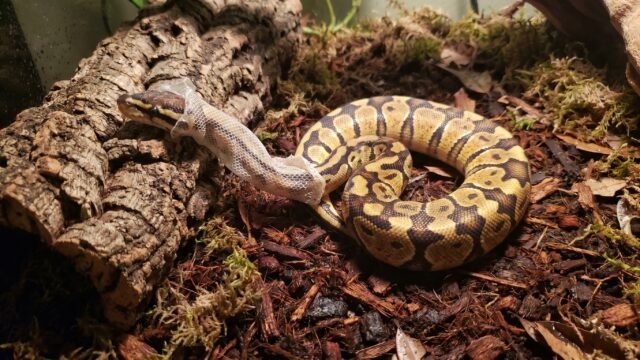
Retained shed is almost always a humidity failure. A clean shed should come off in one piece, including the clear spectacles over the eyes. When humidity runs too low, skin dries before it releases. Retained eyecaps are particularly serious: left in place across multiple sheds, they can impair vision. If eyecaps remain after a shed, do not pull them. Warm soaks can help loosen retained skin elsewhere, but retained spectacles need a veterinarian's hands.
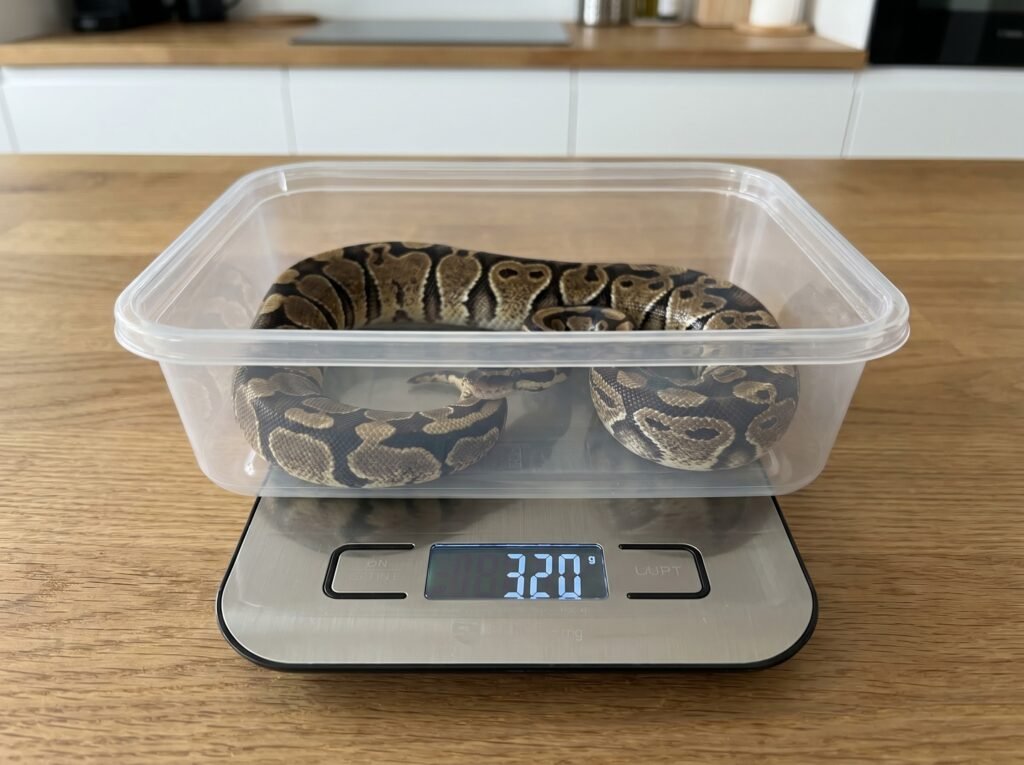
Weight tells you a lot about what is happening inside the animal. A healthy adult ball python has a roughly triangular cross-section when viewed from the front, a firm, rounded belly, and no visible spine ridge. Overweight snakes develop a rounder, barrel profile and may show fat deposits just ahead of the vent. Underweight snakes show a sharp spine ridge, a hollow belly, and loose skin. Monthly weigh-ins on a kitchen scale catch drift before it becomes a problem. What to actually look for, and how to score it, is covered in our body condition score guide.
Knowing when to call a reptile vet
Many ball python owners hesitate to call a vet because the snake "seems okay otherwise." The table above lists the clearest go-now indicators for each condition. As a general rule: any sign that does not resolve in 24 to 48 hours with a husbandry correction, any sign involving the mouth or respiratory tract, and any unexplained rapid weight loss all warrant a professional look.
Finding the right vet before a crisis makes the crisis much easier to handle. Many small-animal practices do not see reptiles. Our vet and quarantine guide walks you through what to look for in an exotic-animal practice and how to set up a quarantine space that protects both your new animal and any you already own.
The best health plan for a ball python is a correct enclosure, consistent monitoring, and a reptile vet on call. Spot the early signs, correct the husbandry, and most problems stay small.