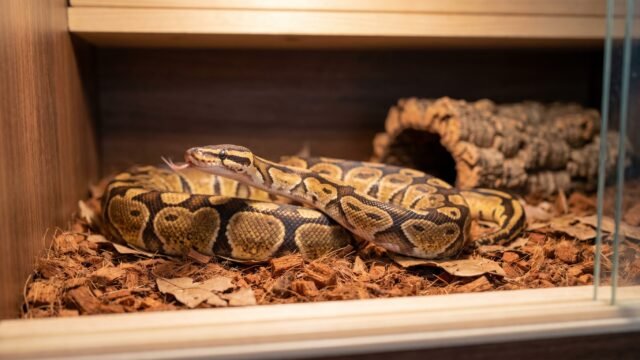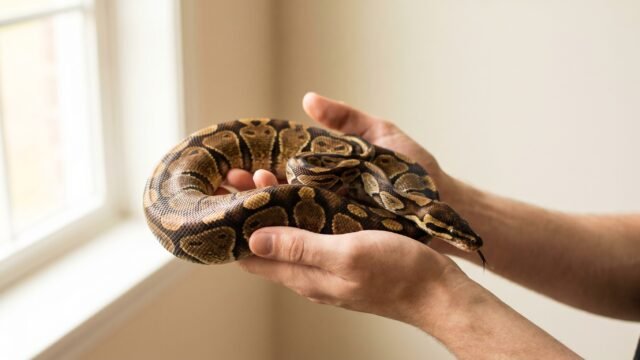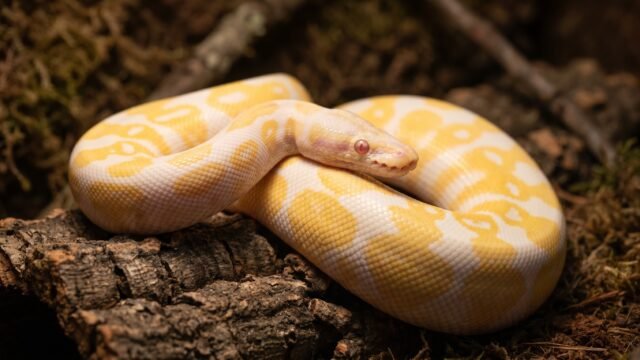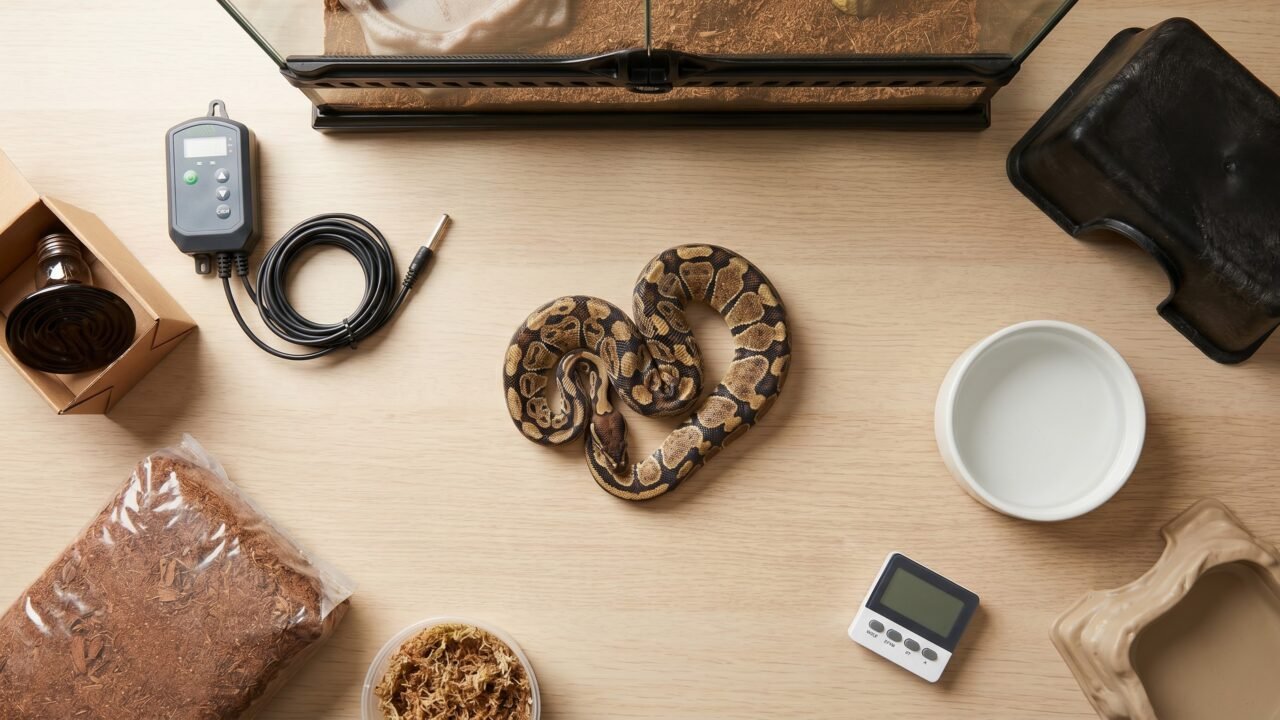
A ball python itself can cost as little as $50 for a standard morph and rarely more than $300 for most popular ones. That price tag is almost misleading, because the enclosure, heating gear, and thermostat together routinely cost two to four times as much as the snake. First-time buyers consistently underestimate this, then scramble to cut corners on equipment that actually keeps their animal healthy. This guide puts the full picture in front of you so you can plan honestly before you commit.
If you want to know specifically what the snake costs across morphs, see our detailed breakdown at /how-much-does-a-ball-python-cost. And before you buy anything, run through the ball python supplies checklist so nothing gets forgotten at the register.
Two-tier cost table: minimum-safe vs ideal setup
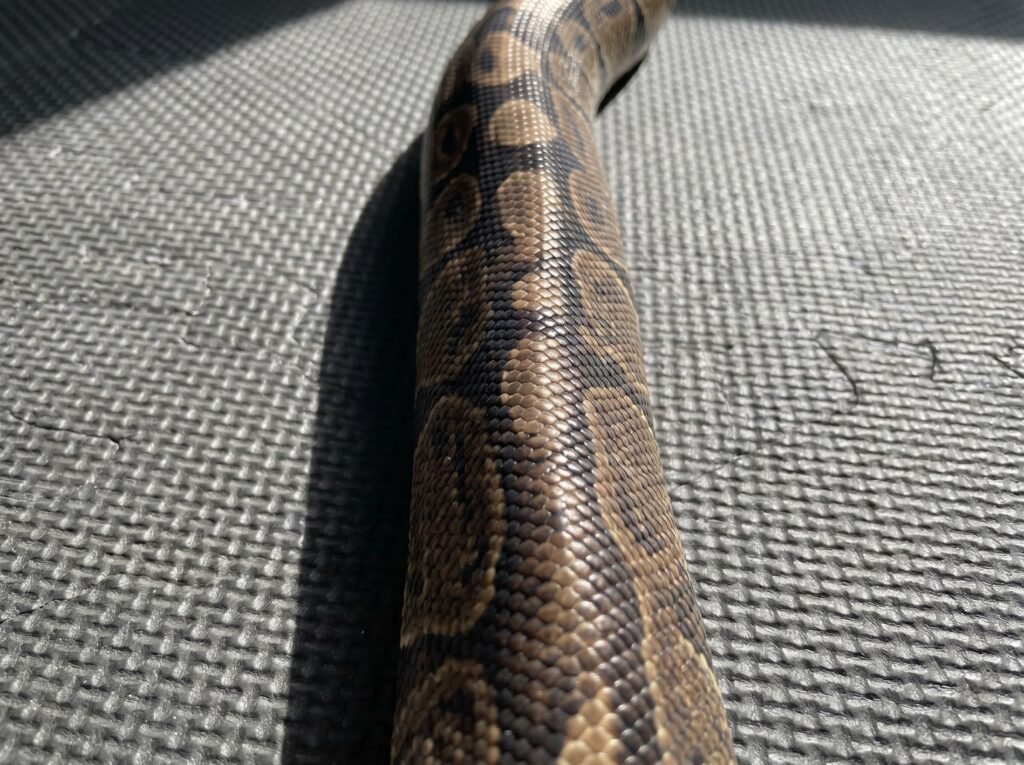
There are two ways to get started. The minimum-safe tier covers everything a ball python genuinely needs to thrive. The ideal tier swaps up to gear that makes husbandry easier long-term and removes the most common failure points (like a flimsy heat mat with no thermostat). Both tiers assume an adult snake. Prices reflect US online retail and are marked as our editorial estimate because retailer pricing shifts; ranges come from current cost guides and real product pages.
| Item | Minimum-safe (our editorial estimate) | Ideal (our editorial estimate) | Notes |
|---|---|---|---|
| Enclosure | $150 to $240 (40-gal glass tank) | $280 to $380 (4x2x2 PVC, e.g. Zen Habitats) | Adult needs minimum 4x2 ft footprint; PVC holds heat and humidity far better than glass |
| Heat source | $20 to $40 (under-tank heat mat) | $50 to $90 (deep heat projector or halogen flood) | Either way, it MUST run through a thermostat; heat mats without one can overheat the enclosure floor |
| Thermostat | $25 to $45 (on/off type) | $55 to $120 (proportional/PID thermostat) | Non-negotiable; a proportional thermostat holds temps tighter and extends heater life |
| Thermometer / hygrometer | $10 to $15 (digital probe) | $25 to $45 (dual-zone digital + infrared gun) | You need readings on both ends of the enclosure, not just one spot |
| Dry hides (x2) | $10 to $20 total (plastic caves) | $25 to $50 total (sturdy resin, snug-fit) | One on the warm side, one on the cool side; snug sizing reduces stress |
| Humid hide | $10 to $20 (deli cup + sphagnum moss) | $20 to $35 (commercial humid hide with lid) | Critical during shed; keeps humidity around 70% in the hide without soaking the whole enclosure |
| Substrate (first fill) | $15 to $25 (newspaper or coconut fiber) | $30 to $55 (bioactive mix or cypress mulch) | Coconut fiber and cypress hold humidity well at the budget tier |
| Water bowl | $8 to $12 | $15 to $25 (heavy ceramic, tip-resistant) | Must be wide enough the snake can coil in it before a shed |
| The snake (standard morph) | $50 to $100 | $50 to $300 (popular designer morphs) | Specialty or rare morphs can run much higher; see /how-much-does-a-ball-python-cost |
| Setup subtotal | $298 to $517 (our editorial estimate) | $550 to $1,100 (our editorial estimate) | Snake included in both totals |
| Monthly running costs | $15 to $30 (our editorial estimate) | $30 to $60 (our editorial estimate) | Food, substrate top-up, electricity; vet costs extra, see below |
The biggest single variable is the enclosure. A 40-gallon glass tank works at the budget tier, but glass loses heat fast and humidity faster. A 4x2x2 PVC enclosure like those from Zen Habitats (currently $324, regular price $379) holds both much better and simplifies daily maintenance. For a snake you may keep for 20 to 30 years, that difference compounds.
Monthly running costs in detail
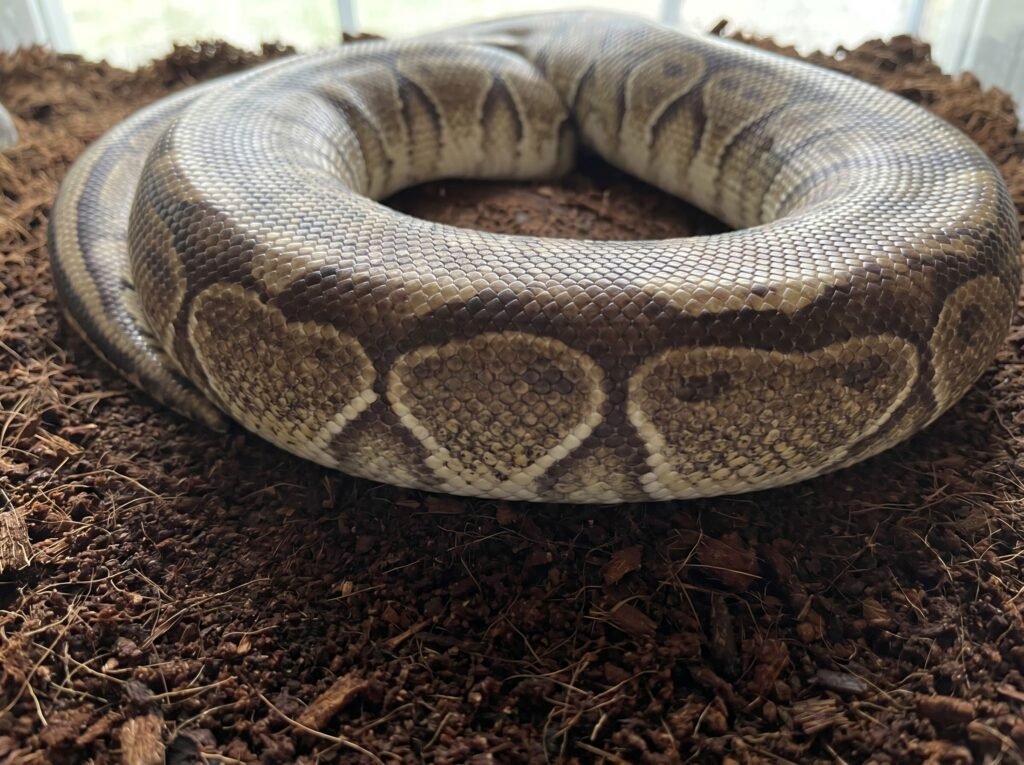
Once the enclosure is set up, costs become predictable. The three recurring lines are food, substrate replacement, and electricity.
Food runs $8 to $15 per month (our editorial estimate), depending on your snake's size and how often it eats. Adults typically eat one appropriately sized frozen-thawed rodent every 10 to 14 days. A bag of frozen feeders from a reptile supplier usually costs $1 to $5 per mouse or small rat. Bulk frozen orders from a reptile-specific supplier drop the per-meal price significantly compared to single-purchase pet store prices.
Substrate replacement adds another $5 to $15 per month (our editorial estimate) when averaged out. Full substrate swaps happen every four to eight weeks; spot-cleaning happens more often.
Electricity is the line most beginners overlook. A heat mat or ceramic emitter running 24 hours draws 25-75 watts depending on the product. SnakeSnuggles' cost guide puts heating electricity at roughly $15 to $25 per month, though your local utility rate changes that number in either direction.
Add it together and most owners land in the $30 to $60 per month range. Some months are lower when the snake skips a meal, which healthy ball pythons do regularly, especially in late autumn and winter.
The vet line everyone skips when budgeting
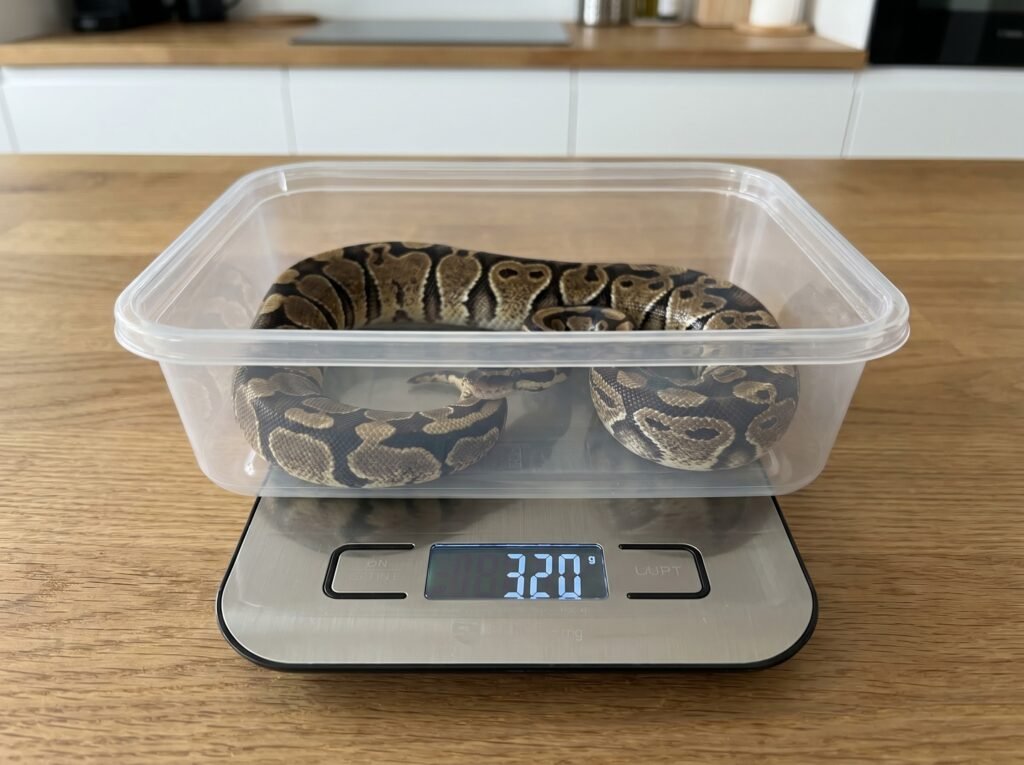
Ball pythons handled properly and kept in a well-set-up enclosure are hardy animals. Still, budget for veterinary care from the start. An initial wellness exam with a reptile-experienced vet runs $40 to $60 (our editorial estimate), according to multiple reptile cost guides. Annual wellness checks in the same range are worth scheduling even when nothing looks wrong, because respiratory infections and parasites often show subtle signs before they escalate.
Watch for these signs that warrant a vet visit: persistent wheezing or open-mouth breathing, mucus around the nostrils, significant retained shed that soaking will not fix, loss of muscle tone, unusual swelling anywhere along the body, or more than 8 weeks of complete food refusal outside the normal winter slow-down. Emergency treatment can run $200 to $500 or more depending on the condition, per SnakeSnuggles' ownership breakdown. Setting aside $100 to $150 per year as a vet reserve is a reasonable baseline.
A reptile vet can distinguish a respiratory infection from other conditions, and scale rot from a bruise, in a few minutes. Home diagnosis is unreliable and delays treatment.
Lifetime perspective: a 20-year animal
Ball pythons routinely live 20 to 30 years in captivity. That changes the math considerably. TerrariumQuest's cost guide puts annual food costs at $130 to $350 and substrate at $50 to $70, and SnakeSnuggles estimates full lifetime ownership at $4,000 to $12,000 across the animal's lifespan. That range is wide because a ball python eating nothing but budget feeders in a stable room costs far less to maintain than one in a premium bioactive setup with annual vet checks. Both ends of the range are realistic.
The setup is the expensive part. Spend the money upfront on a proper thermostat and an enclosure with good insulation, and your monthly costs stay low and predictable for decades.
Ready to start buying? The ball python supplies checklist breaks every item down in priority order so you can shop confidently. And if you are still choosing your first snake, /buying-a-ball-python covers what to look for at a breeder, what health signs to check, and what questions to ask.