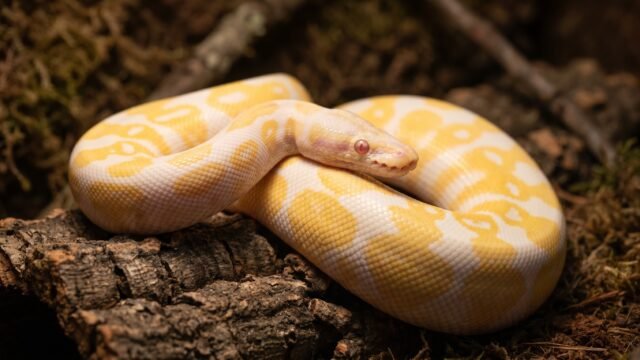
Ball pythons are one of the most popular pet snakes in the world. They stay manageable in size (typically 3 to 5 feet for adults), tolerate gentle handling, and come in hundreds of striking color morphs. But here is something the pet store rarely says out loud: ReptiFiles rates them as intermediate difficulty, and VCA Animal Hospitals describes them as "challenging to keep as pets." They can go weeks without eating, they need precise humidity and temperature gradients, and they live for up to 30 years. That is a long-term commitment that deserves a clear-eyed look before you bring one home.
This guide is a hub. It covers every major area of ball python care at the level you need to understand the picture, then links you to deeper guides on each topic. If you are trying to decide whether a ball python is right for you, start with our honest assessment of whether ball pythons suit beginners. Already have one coming home? Go straight to the first 30 days guide.
Essentials at a glance
The table below is your quick-reference cheat sheet. Each row names a care parameter, gives the target range sourced from current husbandry authorities, and links you to the full guide for that topic. Think of it as a map of every page on this site working together.
| Parameter | Target | Deep guide |
|---|---|---|
| Enclosure (adult) | Minimum 4 ft x 2 ft x 2 ft (roughly 120 gallons); PVC or wood retains humidity better than glass | Ball python enclosure guide |
| Warm-hide temperature | 90-95°F (32-35°C); basking surface may reach higher | Temperature and heating guide |
| Cool-side temperature | 75-80°F (24-27°C); nighttime floor ~72°F | Temperature and heating guide |
| Ambient humidity | 55-65% baseline; humid hide available always; raise toward 70-80% during a shed | Humidity and shedding guide |
| Substrate | 2-4 inches of moisture-retaining substrate (coconut fiber, cypress mulch, or bio-active soil mix) | Best substrates for ball pythons |
| Feeding | Frozen-thawed prey sized to roughly the widest part of the snake's body; hatchlings every 5-7 days, adults every 2-6 weeks depending on weight | Ball python feeding guide |
| Handling | Wait at least two weeks after bringing your snake home; keep early sessions to 5-10 minutes; support the whole body | Behavior and handling guide |
The enclosure: bigger and more private than you might expect
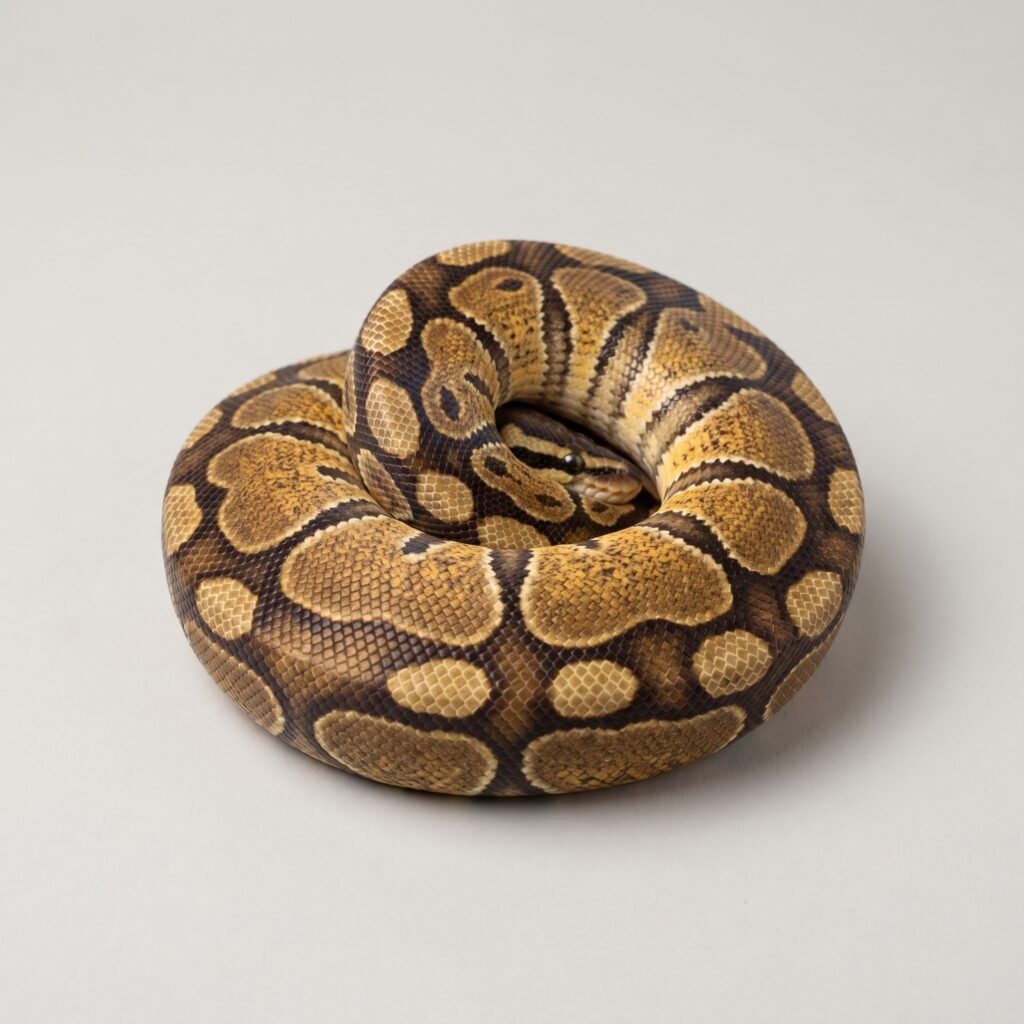
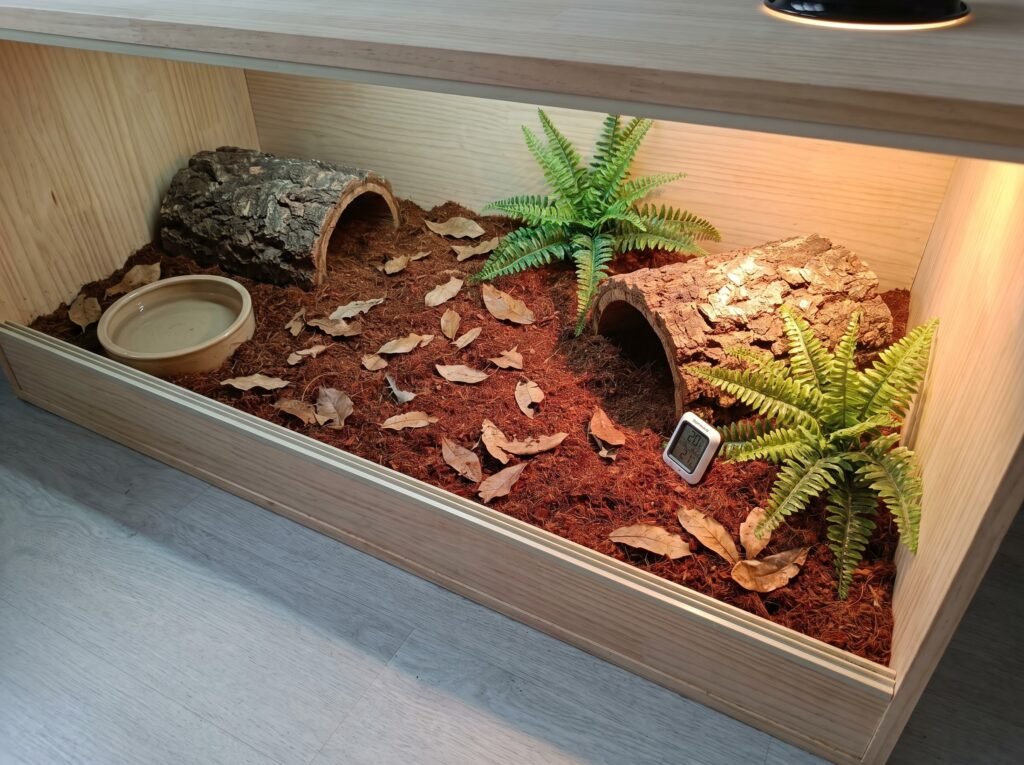
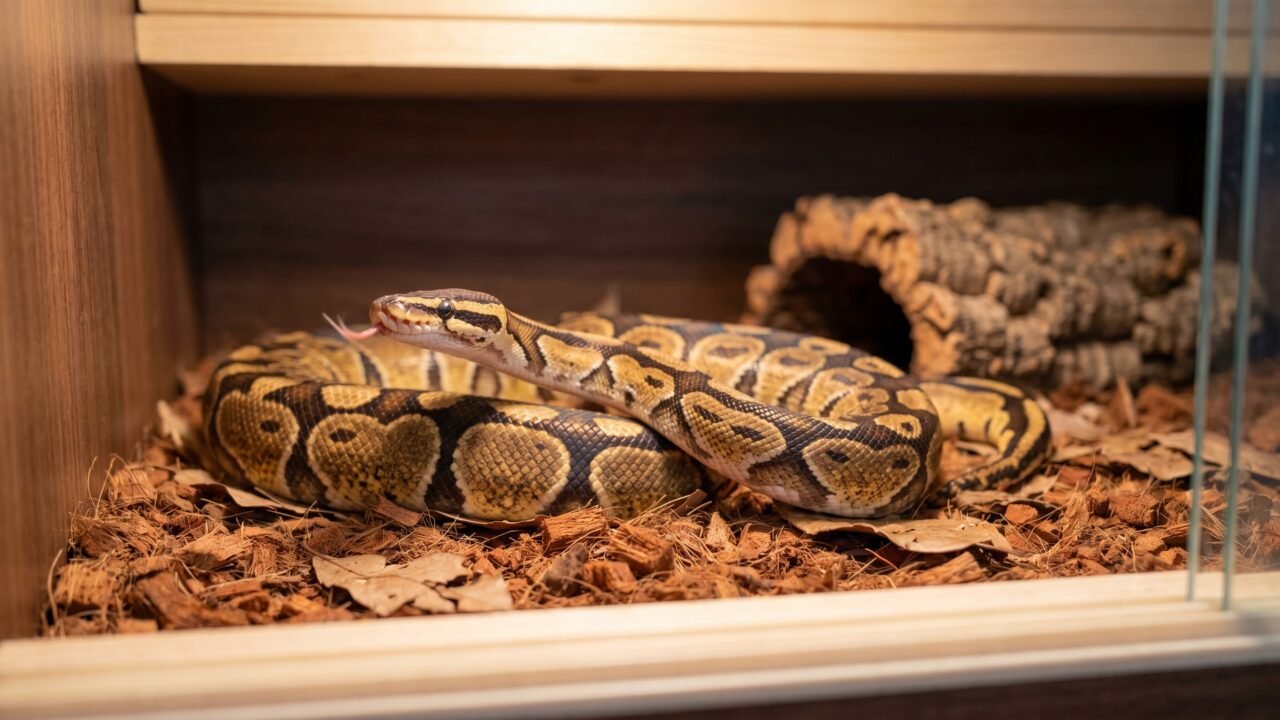
A 4 ft x 2 ft x 2 ft enclosure (approximately 120 gallons) is the minimum experts now recommend for an adult ball python. Pet stores often sell juvenile snakes alongside glass 10-gallon tanks. Skip those. Glass loses heat and humidity quickly, and the adult minimum is several times larger anyway.
Ball pythons feel exposed in open space. A bare enclosure stresses them. The inside needs at least two hides, one on the warm end and one on the cool end, both tight enough that the snake's sides touch the walls. Dense leaf litter and background clutter serve a real purpose: they are stress management, and snakes consistently use them.
PVC and wood enclosures hold humidity far better than glass. For the full breakdown of types, sizes, and what to avoid, see the enclosure guide.
Temperature and heating: a gradient, not a single number
Ball pythons are ectotherms. They cannot regulate body temperature internally, so your enclosure has to provide a real gradient they can move across. One end warm, one end cool. That is how thermoregulation works for them.
According to ReptiFiles (hosted by Zen Habitats), the warm hide should sit at 90-95°F and the cool hide at 75-80°F. Zen Habitats' heating guide lists the basking surface itself at up to 95-104°F, with warm hide air temperature at 86-90°F. These numbers are consistent: the surface directly under a heat lamp runs hotter than the air inside the hide. What matters is that the snake has access to both warm and cool zones.
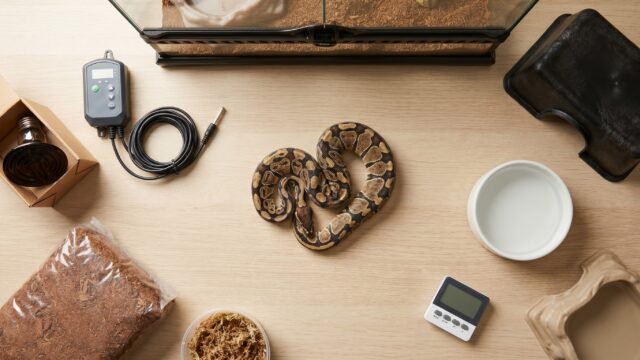
Two rules apply to every single heat source, no exceptions. First, every heat source must be connected to a thermostat. Unregulated heat mats and bulbs overshoot. Burns are serious and expensive to treat. Second, never use a heat rock. Zen Habitats' heating guide is direct about this: heat rocks "are unable to be properly regulated and are extremely unsafe heating elements that often lead to severe burns on reptiles." No exceptions.
The full guide to heat sources, thermostat types, and how to position everything lives at the temperature and heating guide.
Humidity: keeping the balance
Ball pythons come from the humid tropical regions of sub-Saharan Africa. Ambient humidity in the enclosure should sit between 55 and 65% as a baseline, according to ReptiFiles. During a shed cycle, that rises toward 70-80%. A humid hide packed with damp sphagnum moss should be available at all times; it gives the snake a microclimate option and helps prevent stuck sheds.
There is a balance to maintain. Too dry and the snake cannot shed cleanly. Too wet with poor ventilation and you risk scale rot, a bacterial skin infection that looks like red, blistered patches on the underside. Substrate depth and enclosure ventilation both matter. For how to keep humidity stable without tipping into rot territory, see the humidity and shedding guide.
Feeding: patience is the main ingredient
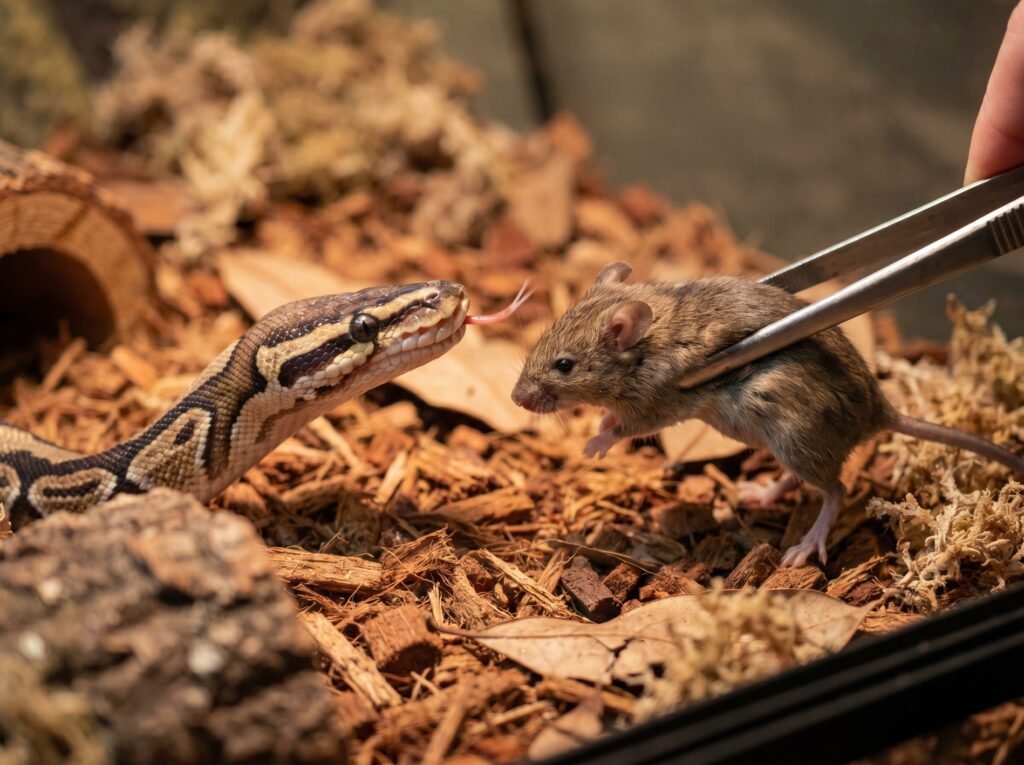
Ball pythons eat whole prey. Frozen-thawed rodents are the standard recommendation because they eliminate the risk of a live rodent injuring your snake. Prey size should match roughly the widest part of the snake's body.
Feeding frequency scales with age and weight. Hatchlings eat every five days. Juveniles under 200g eat weekly. Adults over 1,500g may only need to eat every four to six weeks, per ReptiFiles. These are wide windows for a reason: ball pythons are notorious fasters. A healthy adult skipping several meals during cooler months is normal. Zen Habitats notes that weight loss of more than 10% of total body weight is when you should be concerned.
New keepers often panic at the first missed meal. Most of the time, patience works. The feeding guide covers how to troubleshoot refusals, proper thawing and offering technique, and when a fast actually warrants a vet call. Find it at the feeding guide.
Behavior and handling
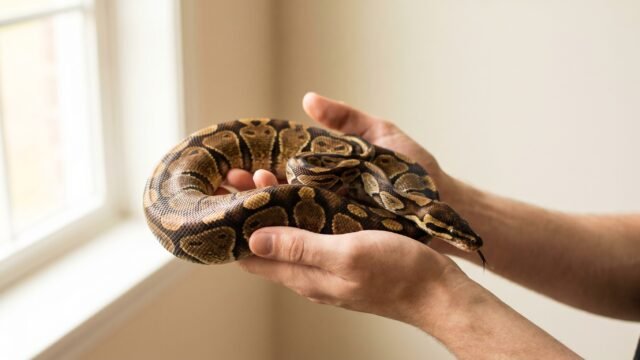
Ball pythons got their name from their defensive curl. When threatened, they tuck their head into the coils of their body. Most captive-bred animals grow calm with regular, gentle handling, but the process takes time.
After bringing a new snake home, wait at least two weeks before handling. The snake is adjusting. It needs to eat reliably before you introduce regular contact. Early sessions should stay short, around five to ten minutes, and increase gradually. Always support the full length of the body. Never handle right after a meal or during a shed.
The deeper nuances of reading body language, what a defensive posture actually looks like, and how to build trust over time are all at the behavior and handling guide.
Health: what to watch and when to call a vet
Most health problems in ball pythons trace back to husbandry. The wrong temperature slows digestion and depresses immunity. Wrong humidity causes respiratory infections and shedding problems. A dirty enclosure invites scale rot and mites.
Signs that warrant a vet visit include wheezing, mucus around the mouth or nose, open-mouth breathing, red or blistered skin on the underside, and any rapid or unexplained weight loss. VCA recommends scheduling a health check within two weeks of acquiring any new reptile, regardless of whether the animal looks healthy. That first exam establishes a baseline and screens for parasites the snake may have brought from the breeder or store.
Find a vet who is a member of the Association of Reptile and Amphibian Veterinarians (ARAV). General practice vets often lack the specialized training reptiles need. For a full rundown of signs, causes, and preventive steps, see the health guide.
Is a ball python actually right for you?
Ball pythons are genuinely rewarding snakes. They are quiet, odorless beyond their enclosure, fascinating to observe, and many become genuinely tolerant of handling. The temperament reputation is well earned.
What often catches new keepers off guard is the long commitment. Thirty years is common. The environmental requirements are specific enough that a poor setup produces a stressed, fasting, sick animal quickly. And feeding refusal is real and frequent enough that keepers who do not know it is normal will find it alarming.
If you are weighing whether to get one, the are ball pythons good for beginners guide addresses this directly, including what prior reptile experience helps and what to set up before the snake arrives. If you have already committed and your snake is arriving soon, the first 30 days guide walks through setup, arrival, and the settling-in period day by day.