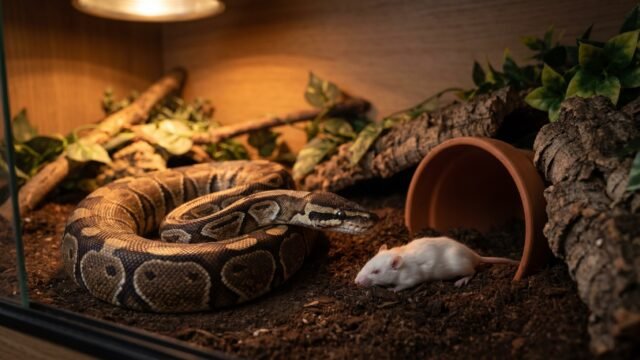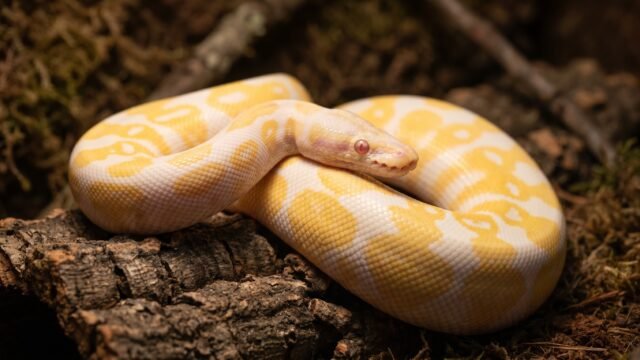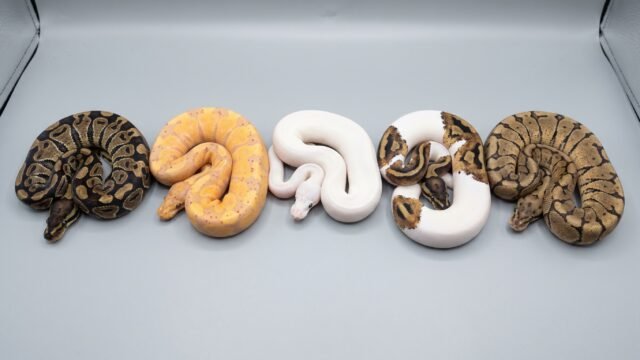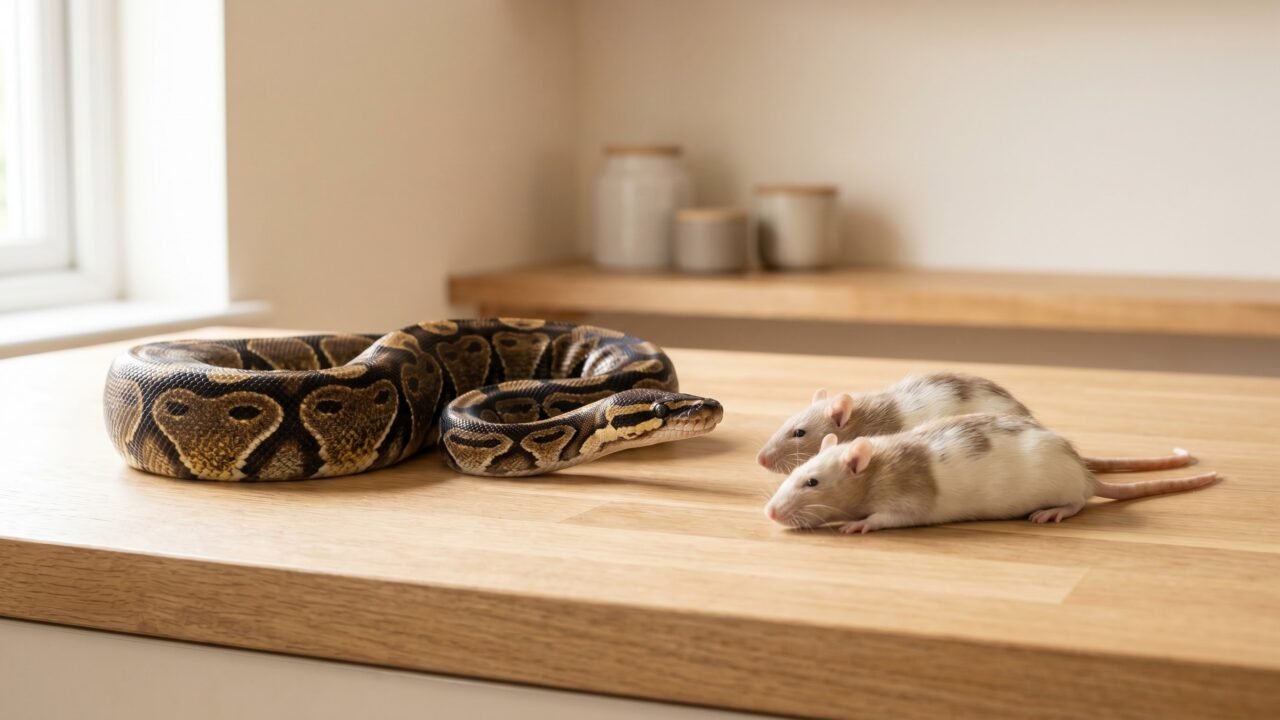
Ball pythons eat rodents. That covers 99% of captive life. In their native range across West and Central Africa, wild ball pythons hunt small mammals such as African giant rats, rufous-nosed rats, and grass mice, plus birds when they are young and quick enough to catch them. In your home, whole frozen-thawed rodents replicate that diet closely enough that well-kept captives stay healthy for 20-plus years on nothing else.
The full feeding picture (which rodent species to use, how big each meal should be, and what to do with the items the internet keeps suggesting: eggs, fish, insects) is worth understanding before you pick up that first feeder. For the complete feeding schedule by age and weight, the pillar guide at Ball python feeding guide has every detail.
Rats vs. mice vs. ASF: which rodent is best?
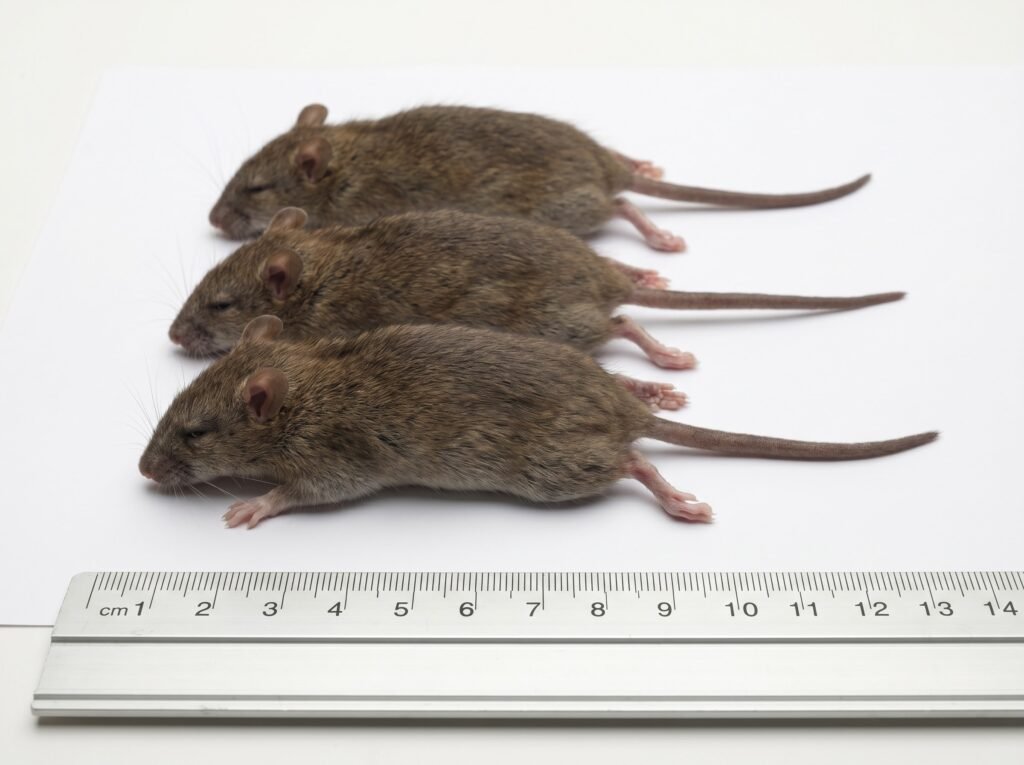
All three are valid. The question is which fits your snake right now and what keeps them eating consistently over a lifetime.
Rats are the go-to staple for most keepers. They scale up with the snake from rat fuzzies through large adults, so you do not have to switch species as your python grows. Domestic rats also have a reliable fat-to-protein ratio and are widely available frozen. ReptiFiles' ball python care sheet (hosted by Zen Habitats) lists rats as the primary recommended prey alongside mice, ASF, chicks, and quail.
Mice work fine, especially for hatchlings and small juveniles where rat fuzzies are too large. The drawback is that large adults would need many mice per feeding to hit an appropriate meal weight, which becomes impractical.
African soft-furred rats (ASF) are the rodent ball pythons hunt most often in the wild. Their scent triggers a strong feeding response, which makes ASF a useful tool if your snake is a reluctant feeder or was originally bred on them. They run slightly higher in fat than domestic rats, so breeders tend to use them strategically rather than as a permanent sole staple for adult snakes.
Quail and day-old chicks round out the variety toolkit. Offering different prey species occasionally helps prevent a snake from imprinting on one type and refusing all others, a headache that experienced keepers try to head off early.
How big should each meal be?
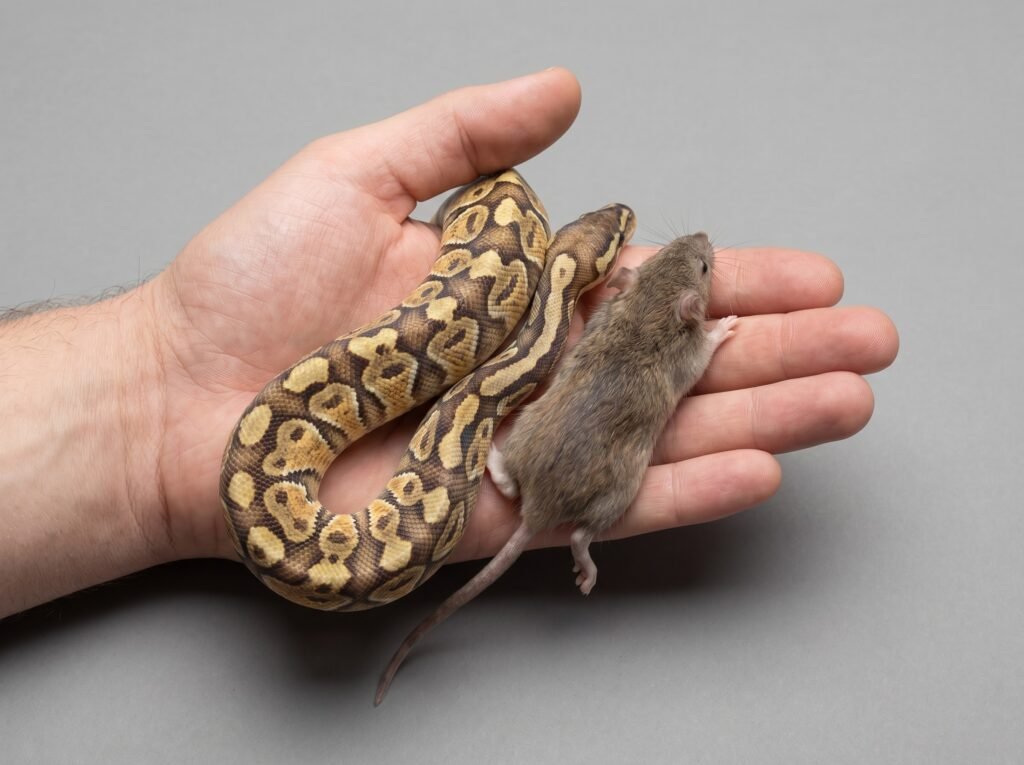
ReptiFiles sets two overlapping guidelines: each prey item should be no larger than 1.5 times the snake's widest girth, and total meal weight should be roughly 10% of the snake's body weight. The girth rule is the more practical one to eyeball at home; the weight rule is useful when you are ordering online and cannot measure the feeder against the snake.
For the full prey-size breakdown by age and snake weight, see our ball python prey size guide.
An obvious lump after feeding is normal. A lump that looks painfully distended, or a snake that regurgitates within 24-48 hours, points to a meal that was too large.
Frozen-thawed prey: why keepers prefer it
Frozen-thawed is the standard recommendation across reptile veterinary guidance for one practical reason: a live rodent can seriously injure a snake. VCA Animal Hospitals states plainly that "even a small mouse can bite and severely injure a pet snake by inducing a severe, potentially life-threatening infection." That risk disappears entirely with pre-killed prey.
There is no nutritional downside to frozen-thawed. Whole-prey items provide complete nutrition regardless of whether the animal was frozen first. The practical upside is convenience: you buy in bulk, store in the freezer, and thaw before feeding.
Thawing correctly matters. Pull the feeder from the freezer the night before and let it thaw slowly in the refrigerator. About 15-30 minutes before feeding, submerge it (sealed in a zip-lock bag) in warm water until the surface reaches around 100F. A warm exterior scent is often the trigger that gets a reluctant python interested.
Can they eat X? A quick reference
A lot of alternative prey items circulate online. Here is where each one actually stands, based on what ball pythons eat in the wild and what captive husbandry research supports.
| Food item | Staple? | Occasional use? | Why |
|---|---|---|---|
| Domestic rats | Yes | Yes | Primary recommended prey; scales from hatchling to adult |
| Mice | Yes (smaller snakes) | Yes | Good for juveniles; impractical for large adults |
| African soft-furred rats (ASF) | Yes (with variety) | Yes | Natural prey in the wild; strong feeding trigger; slightly fattier |
| Chicks / quail | No (variety only) | Yes | Nutritionally incomplete as a sole diet; useful for picky eaters |
| Eggs | No | Rarely, if ever | Unbalanced calcium-to-phosphorus ratio; not part of natural diet; no nutritional benefit over whole prey |
| Fish | No | No | Not a natural prey item; some species contain enzymes that block vitamin B1 absorption; no benefit over rodents |
| Insects (crickets, worms) | No | No | Ball pythons are rodent and bird carnivores; insects are far too small and nutritionally unsuitable |
Ball pythons thrive on whole-prey rodents because that is what their digestive system evolved around. Eggs, fish, and insects are not just unhelpful as staples; they can create nutritional imbalances or, in the case of certain fish, block absorption of a vitamin the snake actually needs.
Signs your ball python is eating well
A healthy feeder leaves no visible trace within 24-48 hours. The snake has a gentle post-meal lump that fades over the following days. Body condition stays lean and muscular, with skin that lies flat against the body and a mid-section that tapers cleanly. Scales look clean and smooth between sheds.
A note on refusal: ball pythons are notorious for skipping meals, sometimes for weeks or even months. ReptiFiles and keepers widely report that a healthy adult refusing food in autumn or winter is common and not automatically cause for alarm. Persistent refusal paired with weight loss, unusual mucus, or visible swelling is worth a call to a reptile vet.