Ball pythons (also called royal pythons in the UK) are forgiving snakes in many ways, but feeding is where new keepers most often go wrong. Feed the right prey at the right size and the right frequency, and your snake will be healthy for decades. Get it wrong and you end up with a stressed, obese, or chronically refusing snake. This guide covers everything: what they eat, how to size prey, how often to feed at each life stage, the frozen-versus-live decision, and how to tell when a feeding strike needs a vet visit.
If you want a quick reference, the summary table below is a good starting point. For the full detail behind every number, follow the links to the spoke guides in each section.
What ball pythons eat
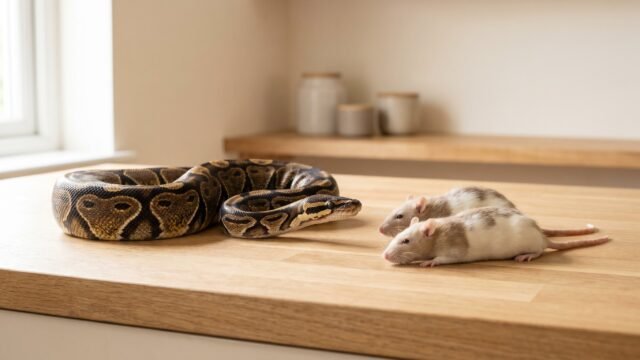
In the wild, ball pythons eat rodents and birds. Females tend to hunt on the ground and eat more rodents; males climb and take more birds. That variety matters, because in captivity most keepers offer only frozen mice or rats.
Mice and rats are fine as a foundation. But experienced keepers and TerrariumQuest's feeding guides both note that some snakes thrive better with occasional variety: small chicks, multimammate mice (also called soft-furred rats), gerbils, or hamsters. If your snake has ever refused white lab mice, VCA Animal Hospitals notes that offering brown gerbils can restart feeding in picky individuals. No single prey item covers every nutrient a snake needs across a long life.
Whole prey is non-negotiable. Ball pythons cannot digest bones, organs, and fur separately; they need the complete animal. Never offer lean muscle meat, eggs, or anything processed.
For the full breakdown of prey types, nutritional value, and what to offer at each stage, see our guide to what ball pythons eat.
Frozen-thawed vs. live prey
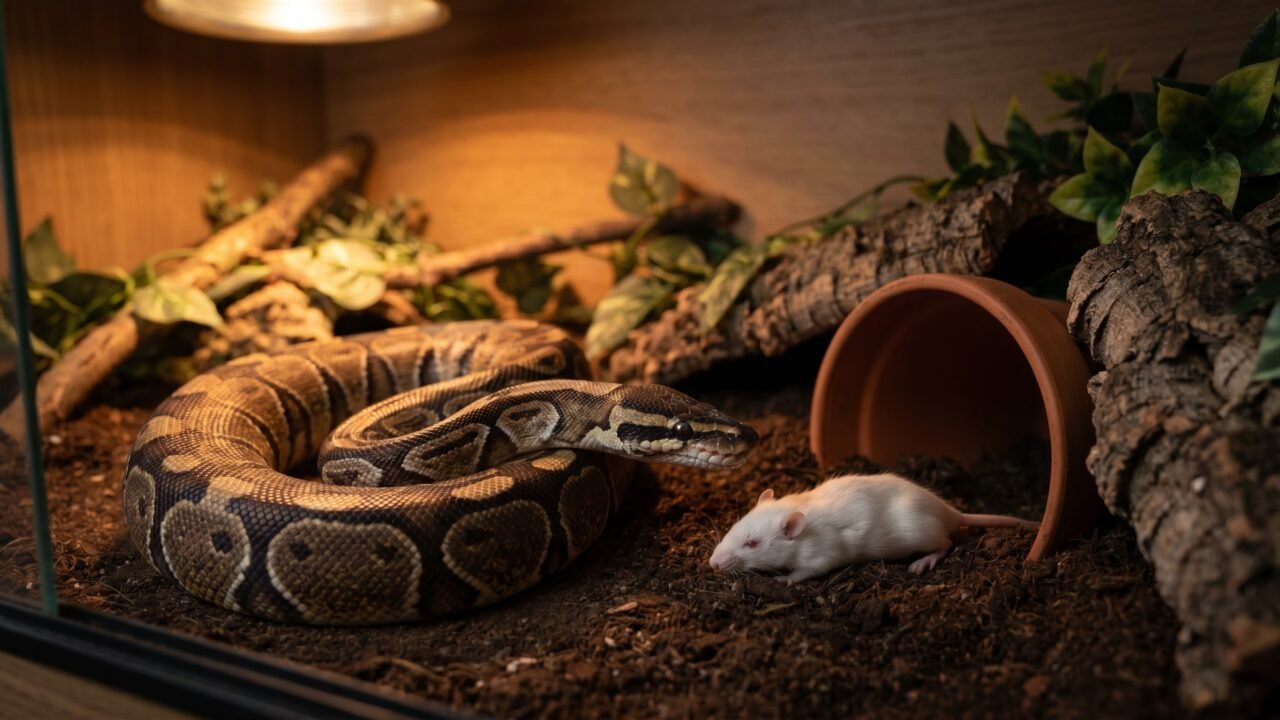
Frozen-thawed rodents are the clear practical choice. They are convenient, consistent in size, and you can stock a month of feeding in one order. Most importantly, a dead rodent cannot hurt your snake.
That last point matters more than most new keepers expect. VCA Animal Hospitals warns that even a small mouse can bite and cause a severe infection. Rats are worse: their teeth and claws can leave deep wounds that become life-threatening. A snake focused on constriction is not defending itself from bites to its head or body.
Live feeding is legal and still practiced by some breeders, usually to convert stubborn feeders. If you use live prey, never leave the animal unattended, and remove it within a few minutes if the snake shows no interest. Leaving a live rodent in the enclosure overnight is genuinely dangerous.
Thawing properly matters too. Take the prey from the freezer, thaw it in the refrigerator overnight or in a sealed bag under warm water for 20-30 minutes, then warm it to roughly 100°F before offering. TerrariumQuest advises against refreezing previously thawed prey, because tissue breakdown can cause the belly to rupture during constriction.
We go deeper on this tradeoff, including how to convert a live feeder, in our guide to frozen vs. live prey for ball pythons.
How to size prey correctly
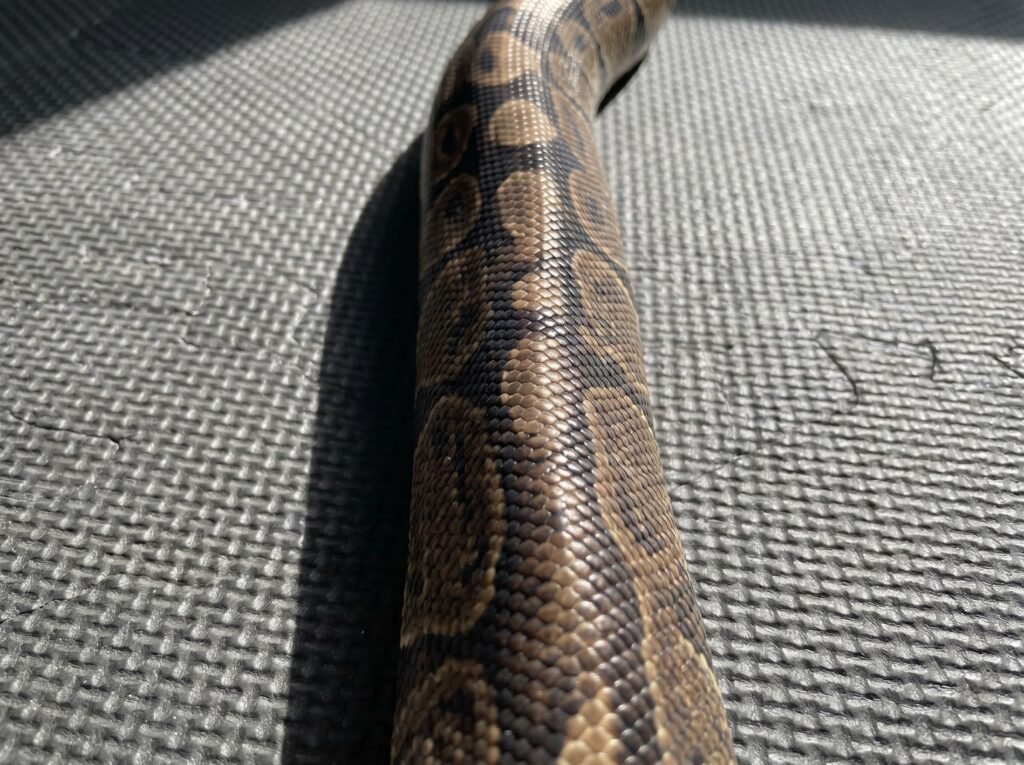
Prey that is too large causes regurgitation. Prey that is too small means the snake finishes a meal and is still nutritionally short. Getting the size right is one of the most important feeding skills.
The field measure keepers use: the prey item should be roughly the same diameter as the snake's widest point at mid-body. TerrariumQuest puts this at 1 to 1.25 times the mid-body diameter, with experienced keepers sometimes going up to 1.5 times. A visible lump after swallowing is normal; a lump that causes obvious distress or leads to regurgitation means you need to drop a size.
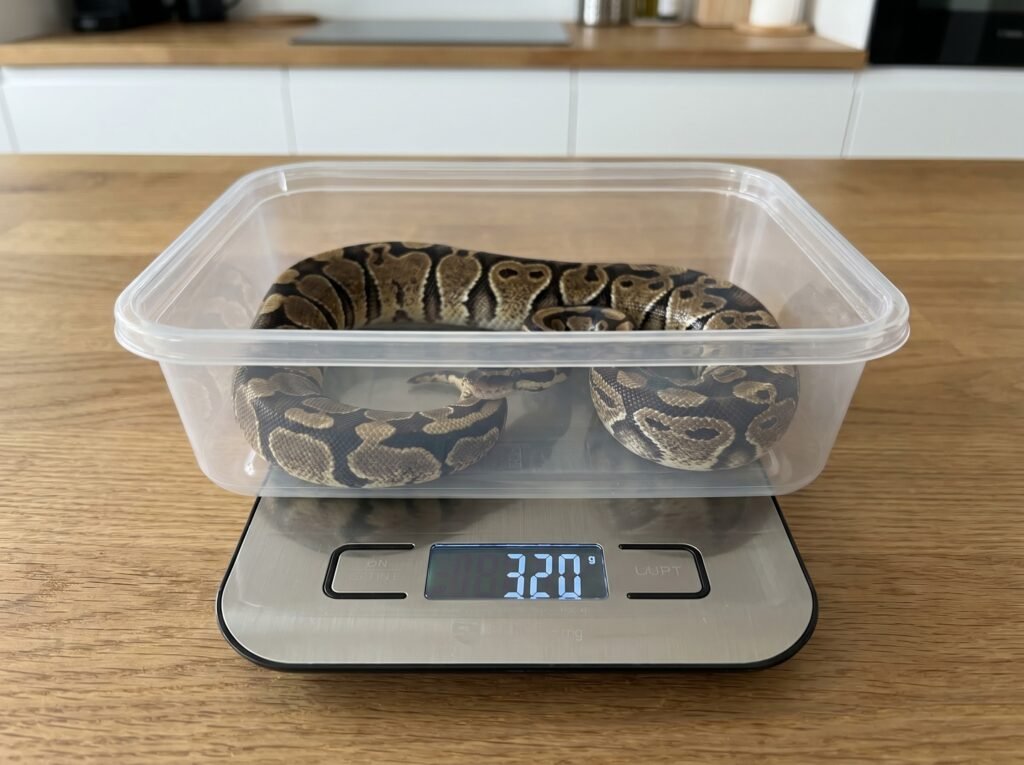
In weight terms, the prey should be roughly 10-15% of the snake's body weight. A 400 g juvenile eats a rodent around 40-60 g. This calculation is a starting check, not a rule to follow mechanically. Body condition always wins over math. A lean snake may need larger or more frequent meals; an already chunky adult should go smaller or less often.
See our dedicated ball python prey size guide for size tables by snake weight and a body-condition scoring method.
Feeding frequency by life stage
How often a ball python needs to eat changes dramatically as it grows. Hatchlings are building bone and muscle fast; a five-year-old adult is essentially maintaining.
The table below is a practical quick reference. For the complete chart with exact prey weights and transition checkpoints, see the ball python feeding chart. For a full discussion of how frequency interacts with prey size and body condition, see our how often to feed a ball python guide.
| Life stage | Approximate age | Prey size (prey weight) | Frequency | Notes |
|---|---|---|---|---|
| Hatchling | 0-3 months | Hopper mouse (7-12 g) | Every 5 days | Offer prey at 95-100°F; hopper mice are the standard starter size |
| Juvenile | 3-12 months | Fuzzy rat or adult mouse (13-30 g) | Every 7-10 days | Transition to rats early; rats are more nutritious than mice long-term |
| Sub-adult | 1-2 years | Small to medium rat (45-150 g) | Every 10-14 days | Body condition check before each feeding; slow down if ribs disappear |
| Adult | 3-5 years | Medium rat or equivalent mice cluster (90-150 g) | Every 14-21 days | Females pre-breeding: feed more often to reach 1,500+ g before pairing |
| Mature adult | 5+ years | Medium rat (90-150 g) | Every 21-50 days | Slower metabolism; obesity is the bigger risk at this stage |
These numbers come from TerrariumQuest's feeding chart and broadly align with VCA Animal Hospitals' general guidance that younger snakes eat more frequently than mature ones. Use them as a starting point, then adjust based on what you see in your individual snake.
When a ball python won't eat
A feeding strike is the single most common concern new ball python keepers bring to forums. Most of the time it is not a crisis. Ball pythons are adapted to survive long periods without food; healthy adults have been documented fasting for several months without significant health decline.
Normal reasons for refusing food include:
- Moving to a new home (stress-related; can last weeks)
- An upcoming shed cycle (snakes often refuse one or two meals pre-shed)
- Seasonal or breeding-season fasting, especially in males during autumn and winter
- Enclosure too cool (check that your warm hide sits at 86-90°F air temperature; if the heat source has no thermostat, it is almost certainly off)
- Stress from too much handling, a hide that does not feel secure, or a bright, exposed enclosure
Concerning signs that warrant a reptile vet visit: visible weight loss, mucus around the mouth or nostrils, wheezing, mites, or a refusal that extends past several weeks alongside any of the above physical signs. A healthy adult refusing food alone for a month is usually manageable. A snake losing weight and refusing food warrants a vet appointment.
We cover every cause, fix, and escalation point in detail in our guide to ball pythons that won't eat.
A note on enclosure temperature and feeding
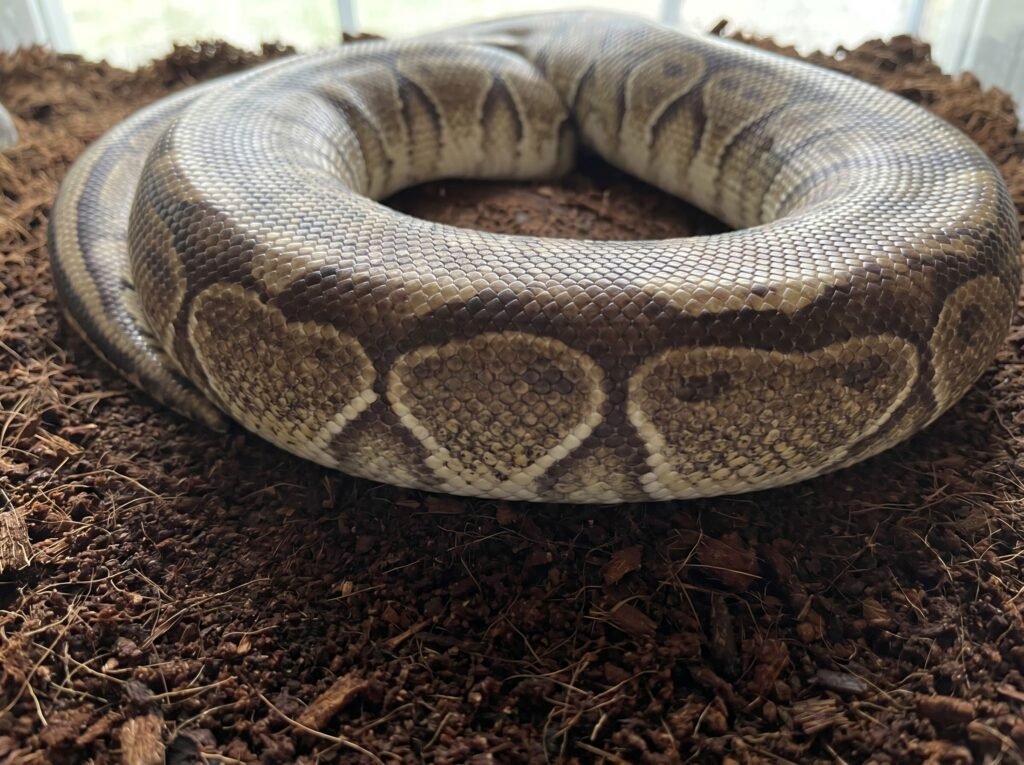
Digestion in snakes is powered by external heat. A ball python that swallows prey in a cool enclosure cannot digest it properly, which leads to regurgitation and puts real stress on the animal.
There is a genuine numbers disagreement in the care community worth naming clearly. ReptiFiles' care sheet (hosted via Zen Habitats) gives 86-90°F for basking air temperature and 95-104°F for direct surface temperature where the snake contacts the heat source. Search summaries of ReptiFiles often cite "88-92°F" for the warm hide. Both refer to real measurements at different points in the enclosure. The surface under a heat mat runs hotter than the air above it; your thermostat probe should sit inside the warm hide at snake level, not on the heat mat itself. Aim for 86-90°F air in the warm hide; the cool side should hold 72-80°F. Every heat source needs a thermostat. No exceptions.
After feeding, let the snake digest in peace. Wait 48-72 hours before handling. A snake that is stressed, grabbed, or dropped while digesting will regurgitate, and repeated regurgitation damages the digestive tract.