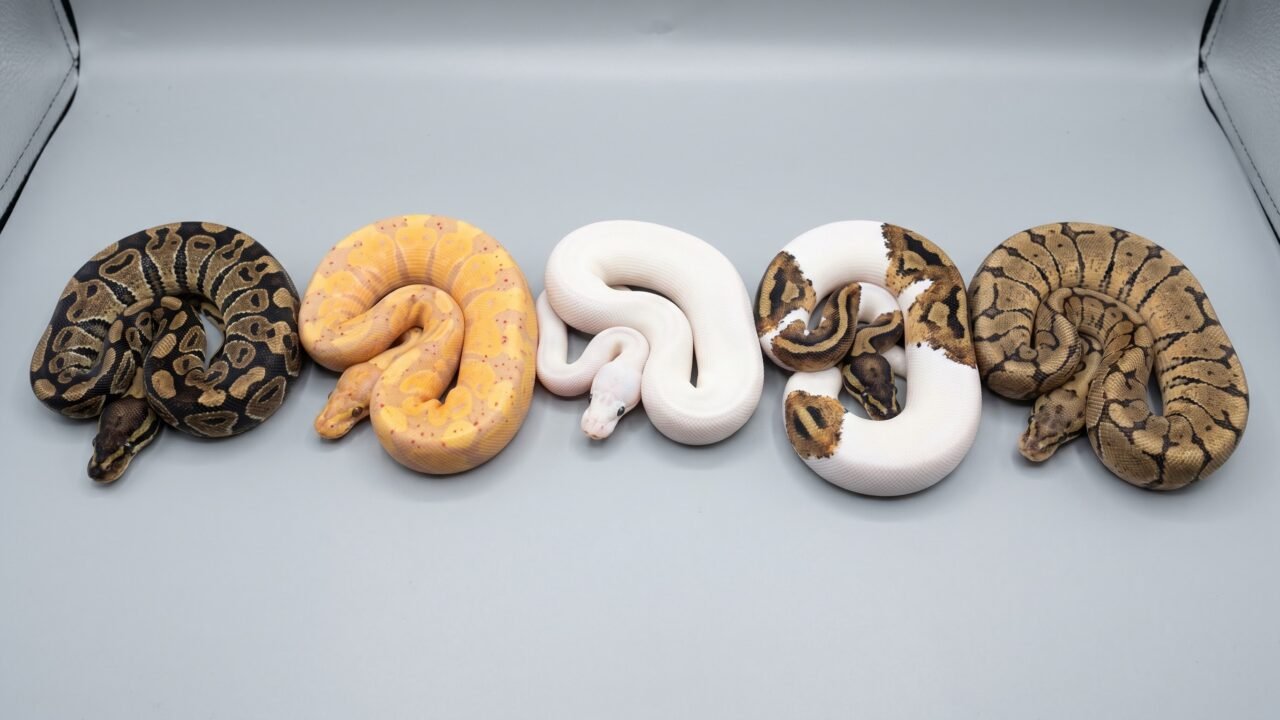
Ball pythons now come in over 4,000 documented color and pattern combinations, but most of those extravagant designer animals trace back to about a dozen foundational morphs. Understanding the base morphs, how each gene behaves, what the animal actually looks like, and what you should budget, cuts through the noise fast. This guide covers the 10 most popular ones, with a plain genetics primer and a ready-reference table that includes the one welfare flag the hobby cannot ignore.
A two-minute genetics primer
Every ball python morph falls into one of three inheritance categories, and knowing which category a gene belongs to tells you almost everything about breeding outcomes and pricing.
Recessive genes hide. A snake needs two copies, one from each parent, to show the trait visually. Carriers (animals with only one copy) look like ordinary ball pythons. Albino, piebald, and clown are all recessive. That hidden-gene dynamic is exactly why "100% het piebald" animals cost real money even though they look normal.
Co-dominant (incomplete dominant) genes show with a single copy and produce a more extreme "super" form when two copies are present. Pastel, mojave, and lesser are co-dominant. Breed two mojaves together and you get a 25% chance of a super mojave per egg, a pure white snake with blue eyes called a blue-eyed leucistic.
Dominant genes show visually with just one copy. There is no "het" form, and the homozygous version (two copies) is either identical to the single-copy animal or, in the spider's case, lethal in the egg. Spider is the dominant morph most keepers will encounter.
For a deeper look at genetics and breeding outcomes, MorphMarket's Morphpedia is the industry's most thorough free reference.
The 10 morphs at a glance
The table below draws on MorphMarket live-listing data and the Morphpedia genetics database. Price tiers reflect typical single-gene hatchling ranges in the current US market; combos and proven breeders run higher.
| Morph | What it looks like | Inheritance | Rough price tier (single gene) | Welfare flag |
|---|---|---|---|---|
| Normal (wild-type) | Dark brown with tan "alien head" blotches, cream belly | N/A, no mutation | $50 to $100 | None |
| Pastel | Brightened yellows, lighter browns, white lips, pale eyes | Co-dominant; super pastel = two copies | $75 to $150 | None |
| Banana (Coral Glow) | Yellow-banana base, pink-lavender undertones, freckling in adults | Co-dominant; sex-linked quirk (see below) | $150 to $400 | None |
| Mojave | Faded pattern with a distinctive dorsal stripe; super = blue-eyed leucistic | Co-dominant; BEL complex | $100 to $200 | None |
| Lesser (Butter) | Washed-out tan with lighter pattern; super = blue-eyed leucistic | Co-dominant; BEL complex | $100 to $200 | None |
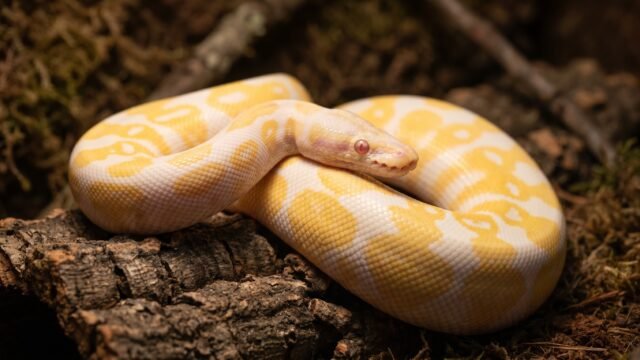
| Albino | White and yellow with red/pink eyes; no black pigment | Simple recessive | $150 to $300 | None |
| Piebald | Irregular white patches interrupting normal pattern | Simple recessive | $250 to $700 | None |
| Clown | Reduced dorsal pattern, striped sides, jigsaw-like markings | Simple recessive | $200 to $400 | None |
| Blue-eyed leucistic (BEL) | Pure white body, striking blue eyes | Designer combo: two BEL-complex genes | $400 to $1,000 | None (same-morph pairings risk eye defects) |
| Spider | Thin, web-like dorsal pattern, high contrast, pale sides | Dominant; homozygous lethal | $100 to $300 | Neurological wobble, see below |
Morph-by-morph notes
The table gives you the overview. A few morphs deserve extra explanation before you spend money on one.
Normal
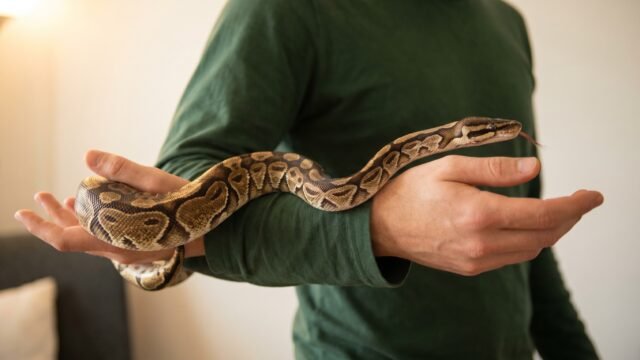
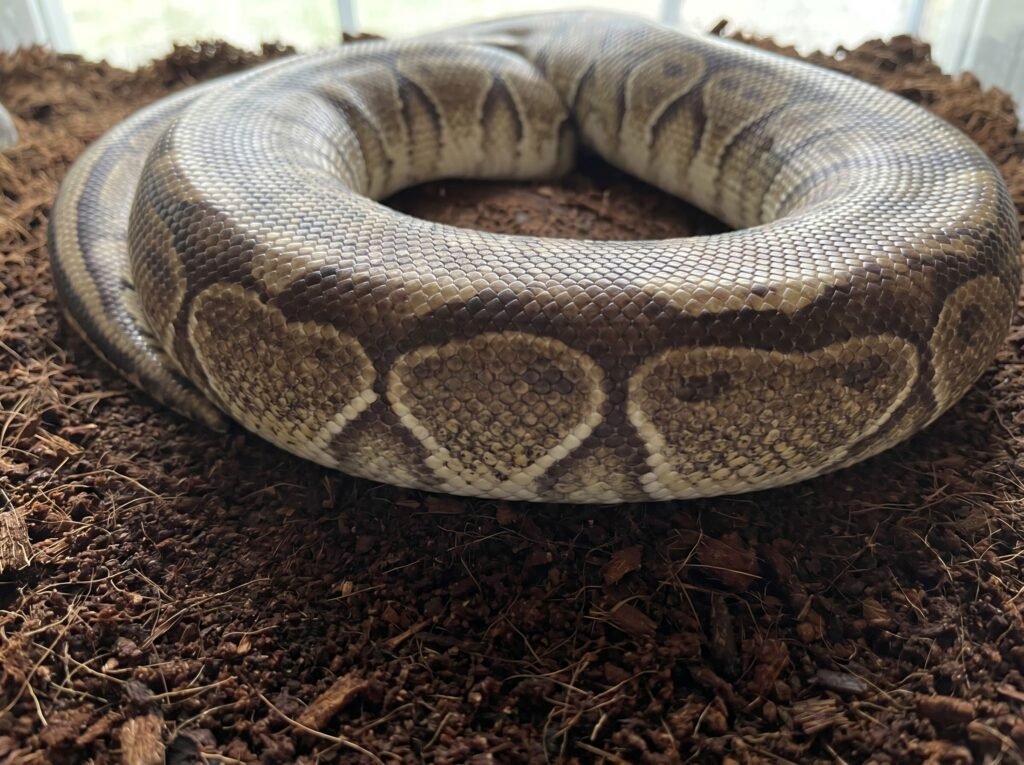
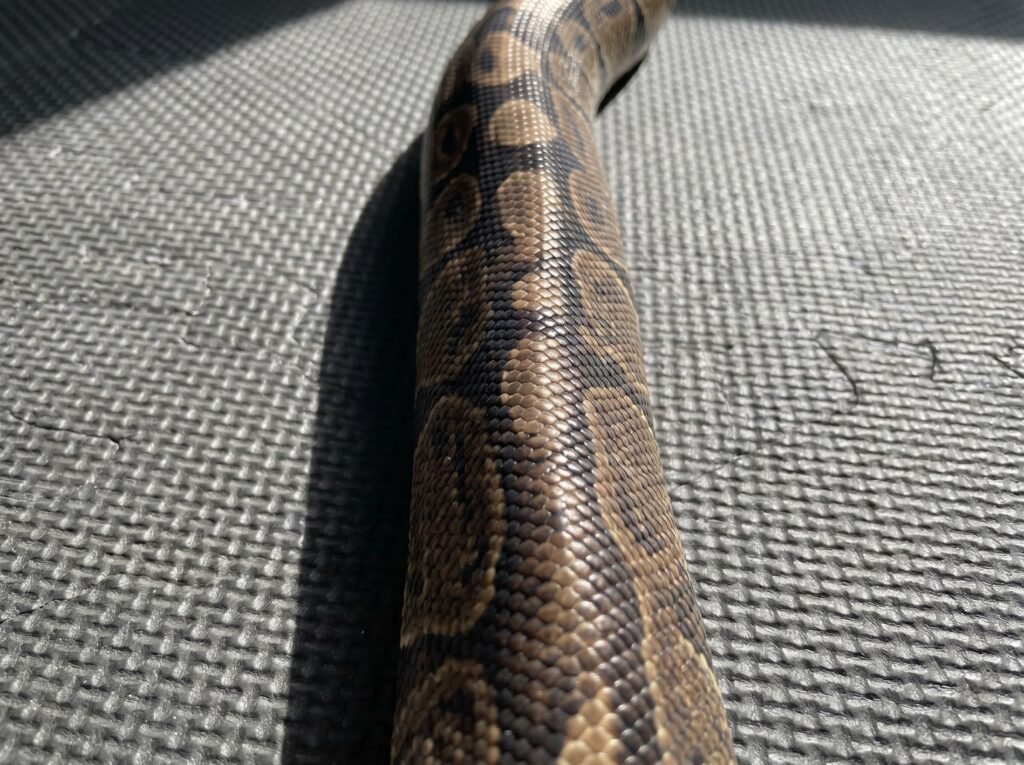
Underrated. Wild-type ball pythons have a genuinely handsome pattern: dark chocolate puzzle pieces over warm tan, a clean cream belly. They cost almost nothing to buy and share every husbandry requirement with their fancy cousins. If you are new to ball pythons, our guide on the best ball python morphs for beginners makes the case for starting simple.
Pastel
Pastel is the hobby's workhorse gene. One copy brightens yellows and scrubs some of the darker brown. Two copies (super pastel) produce a snake that is almost entirely lemon-yellow. Because pastel is co-dominant and has been in the trade for decades, single-gene hatchlings are plentiful and cheap. Pastel stacks cleanly into almost any combo, which is why it shows up in hundreds of designer animals.
Banana (Coral Glow)
Bananas are unmistakable: a warm yellow-orange body with pink-lavender blushing and a freckling of darker spots that intensifies as the animal ages. The gene is co-dominant, but it carries a sex-linked twist that surprises many first-time breeders. Whether a banana male is a "male maker" or a "female maker" determines the sex ratio of his offspring: male-maker bananas pass the gene only to sons, skewing the non-banana offspring female. Female-maker bananas do the reverse. This does not affect care at all, but it matters a great deal at breeding time.
Mojave and Lesser
These two genes sit in the same genetic complex, called the BEL complex. Each looks modestly different as a single-gene animal: the mojave has a cleaner dorsal stripe; the lesser (also sold as "butter") is a softer, more washed-out tan. Their real power is as a pair. Breed a mojave to a lesser and 25% of eggs will hatch as pure-white, blue-eyed leucistics. That BEL outcome is why both genes have maintained solid demand even as prices for single-gene animals have dropped.
Blue-eyed leucistic (BEL)
The BEL is produced when a snake inherits two copies of any genes from the BEL complex (mojave, lesser, butter, Russo, and a few others). The result is a wholly white animal with vivid blue eyes. According to More Reptiles, BELs typically run $400 to $1,000 depending on parentage and quality. One production note worth knowing: same-gene pairings (lesser x lesser, butter x butter) can produce offspring with exaggerated, bulging eyes. Crossing two different BEL-complex genes avoids that problem entirely.
Albino
Albino was one of the first ball python morphs ever documented in captivity, appearing in the early 1990s. It knocks out all dark (melanin) pigment, leaving a white-and-yellow snake with red or pink eyes. Simple recessive inheritance means both parents must carry the gene. Albinos are common enough today that hatchlings are genuinely affordable, and the gene stacks beautifully into combos like albino piebald and albino clown.
Piebald
Piebald is one of the most visually dramatic recessive genes in the hobby. The snake carries irregular patches of pure white, completely without pattern, that interrupt otherwise normal coloration. The white-to-patterned ratio varies by animal, from barely 10% white to more than 90%. Scientists linked piebald to a nonsense mutation in the TFEC gene in a 2023 study published in Current Biology. Single-gene pieds have become accessible over the past decade; piebald combinations with clown or albino still command premium prices.
Clown
Clown reduces the dorsal pattern to a clean, angular stripe and replaces the busy side pattern with bold, symmetrical markings. The overall effect is a tidier, almost graphic look compared to a normal. It is another simple recessive, so producing visual clowns requires two-copy animals or het x het pairings. Clown was once one of the most expensive genes in the hobby (early animals sold for tens of thousands of dollars), but single-gene clown hatchlings now sell for $200 to $400. Clown combos, especially clown piebald and albino clown, remain among the hobby's most sought-after designer animals.
Spider, and the welfare flag you need to know
Spider produces a striking thin, web-like dorsal pattern with pale sides and high contrast. It is dominant, which means a single copy produces the full visual. The homozygous form (two copies) is lethal in the egg, so no super spiders exist. And here is the part that every buyer deserves to understand clearly.
Every spider ball python carries a neurological condition the hobby calls "wobble syndrome." A 2022 study published in PLOS ONE by Starck et al. identified its structural cause: inner-ear malformations, widened semicircular canals and a deformed, undersized sacculus, that impair the snake's sense of balance and equilibrium. Symptoms range from subtle head tremors during feeding to severe corkscrewing, inability to right itself, and difficulty striking. The severity varies from animal to animal, but the malformation is present in all of them. Welfare scientists surveyed for a formal assessment rated the impact as moderate to severe in 89% of responses.
The International Herpetological Society banned spider royal pythons from its shows on that basis, and continues to list the morph among its banned species. The peer-reviewed evidence for the structural cause is well-established. For the full ethics discussion, see our dedicated piece on spider ball python wobble and ethics.
What actually drives price
A morph's price depends on more than gene rarity. Four factors push the number up or down.
Rarity and time on market. Newly discovered genes debut above $10,000 and fall 60-80% within five years as breeders saturate supply. Pastel, albino, and mojave are 20-plus years old, which is why hatchlings are cheap. Newer "designer" stack combos carry the premium now.
Sex. Female ball pythons consistently command higher prices than males of the same genetics because females are the limiting factor in any breeding program.
Feeding record. A hatchling that has eaten five or six times on frozen-thawed rodents is worth more than a fresh hatch. Reliable feeders reduce buyer risk.
Combo complexity. A piebald is affordable. A piebald clown albino carries a much higher price tag. Each additional recessive gene multiplies the breeding work required to produce the animal, and that labor is priced in.
For an overview of how all ball python morphs fit together as a topic, the parent article at ball python morphs covers the broader landscape including rarer genes this spoke does not touch.
Husbandry is the same regardless of morph
Genetics change the colors and patterns, but the animal's care requirements stay constant. Every ball python, normal or designer, requires a warm side of 88-92°F and a cool side of 78-80°F, with every heat source connected to a thermostat. Adults need an enclosure at least 4 feet by 2 feet. Humidity should sit around 60%, rising toward 70% during shed, with a humid hide available throughout. Prey should not exceed 1 to 1.5 times the snake's widest girth. None of that changes based on what gene the snake carries, except for spider morphs, where feeding difficulty from the wobble sometimes requires extra patience and technique.
If you are still deciding which morph to start with, the recommendations at best ball python morphs for beginners address the welfare flag on spiders alongside the other key considerations.