Ball pythons can become genuinely calm in your hands. Most will stop balling up within a few weeks of regular, patient handling, but the technique and timing matter more than people expect. Pick up a new snake too soon, handle right after a meal, or grab from above and you will get a stressed, defensive animal every time. Get those basics right and handling becomes easy for both of you.
This guide covers exactly how to pick one up, how often to do it, how long each session should last, and, just as important, the situations where you should put the lid back on and walk away.
For a broader look at what ball python body language tells you during and between sessions, see our full guide on ball python behavior and handling.
How to pick up and hold a ball python
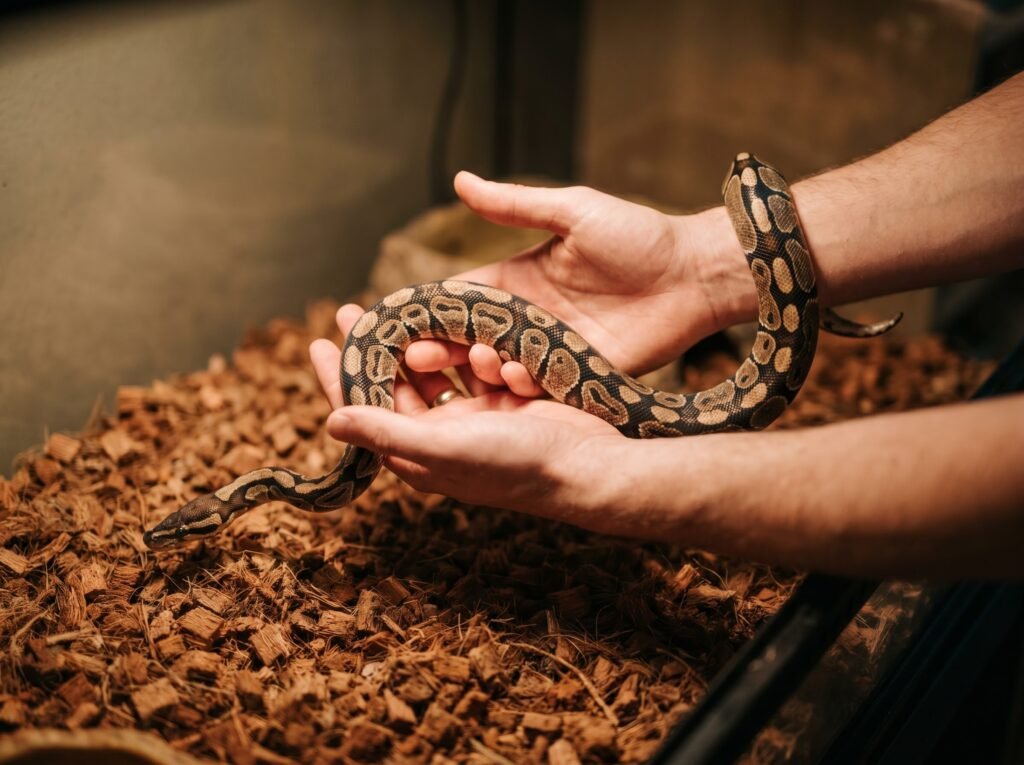
Approach from the side, never from directly above. A hand dropping from overhead mimics a bird of prey. Even a tame ball python can flinch, ball up, or strike if surprised that way. Come in low and from the side, move deliberately, and let the snake notice your hand before you touch it.
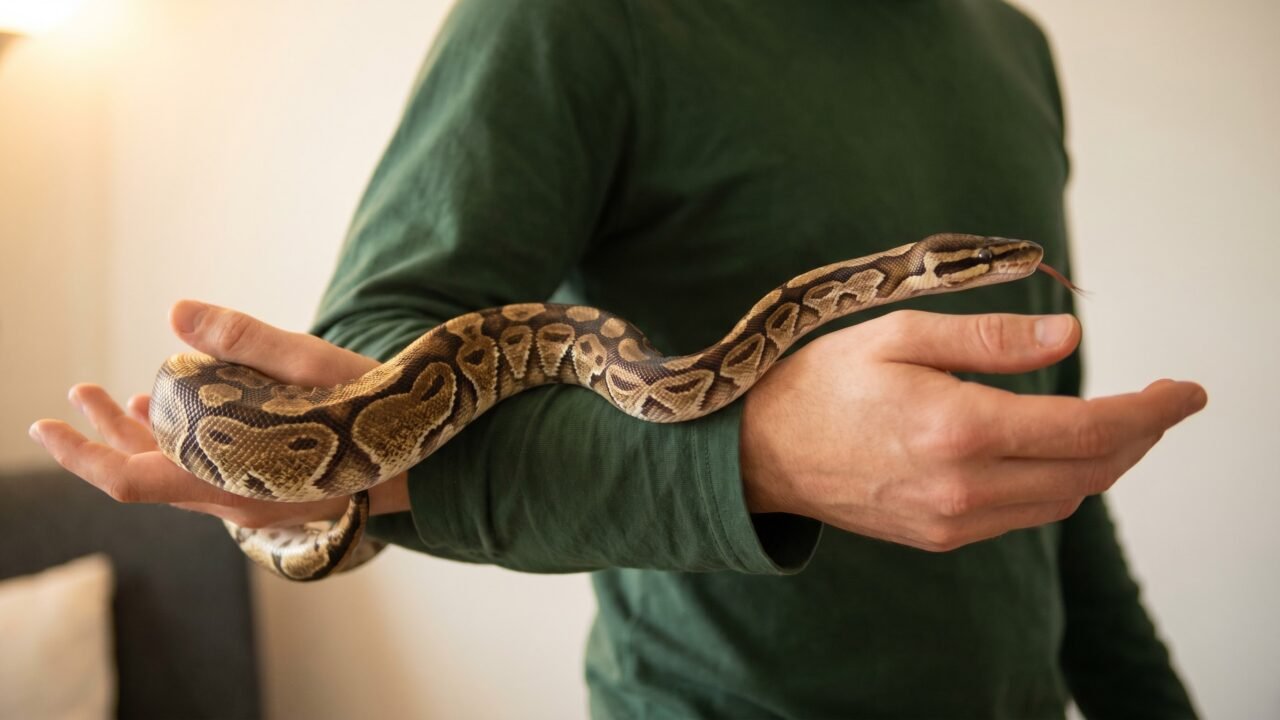
Slide one hand under the mid-body and scoop. Do not grip. The goal is to let the snake rest its weight on your forearm, not to hold it in place. As it comes off the ground, bring your second hand under the rear third of the body so the full length is supported. Ball pythons feel insecure when sections of their body dangle freely, that insecurity reads as stress.
During the session, keep letting the snake move between your hands at its own pace. That slow, exploratory movement is a good sign. A snake that freezes rigid or tucks its head and refuses to move is telling you something is wrong.
A few hard rules from reptile care authorities:
- Never grab near the head or pick up by the neck, this triggers defensive biting and can injure the snake.
- Never pick up by the tail. It causes spinal stress and the snake will thrash, making a bite far more likely.
- Keep the snake away from your face and never let it loop around your neck. A ball python can tighten a coil around your throat faster than feels comfortable.
- Wash your hands before every session. Rodent scent on your fingers can trigger a feeding response, a strike that has nothing to do with aggression.
The TerrariumQuest handling guide and the Vet Desk care overview (reviewed by Dr. Lauren Demos, DVM) both emphasize full-body support and a side approach as the foundation of low-stress handling.
How often and how long, the frequency guide
Once your ball python is settled in and eating reliably, aim for one to three sessions per week. Every other day is a reasonable rhythm for an acclimated adult. Daily handling is generally too much, these are animals that spend most of their lives in a hide, and they need time to rest and thermoregulate without interruption.
Session length should start short and build. For a new or skittish snake, five minutes is plenty. Once it is consistently calm and exploring, you can stretch sessions to 15-20 minutes. OddlyCutePets, whose handling article is reviewed by Dr. Dilber Hussain, DVM, recommends keeping sessions under 20 minutes as a ceiling for most adults.
The table below lays out the full framework, frequency, duration, and the situations where you skip the session entirely.
| Situation | Frequency | Session length | Notes |
|---|---|---|---|
| New snake (first 2 weeks) | None | 0 min | Let it settle, eat at least once, and adjust to the new enclosure before any contact |
| New snake (weeks 3-8, acclimating) | 1-2x per week | 5-10 min | Keep sessions short and calm; stop at first stress sign; consistency builds trust faster than duration |
| Acclimated adult | 1-3x per week | 15-20 min max | Never more than once per day; every-other-day works well for most keepers |
| Within 48-72 hours of a meal | None | 0 min | Regurgitation risk; larger meals = longer wait; use 72 hours for adults eating large prey |
| During shed (dull scales, blue eyes) | None | 0 min | Snake is effectively half-blind and more defensive; resume after the shed is complete |
| Snake showing stress signs | None | 0 min | Return it to the enclosure immediately; note what triggered it and reduce session length next time |
When NOT to handle, and why it matters
The post-feeding window is the rule most keepers break first. Wait at least 48 hours after a meal before picking your snake up. For larger adults eating adult mice or small rats, 72 hours is safer. When a ball python is stressed during digestion, it may regurgitate. That is not just unpleasant, according to South Pasadena Animal Hospital, a reptile-treating veterinary clinic, repeated regurgitation strips the esophageal lining and creates a cycle that is hard to break. One regurgitation event means a minimum two-week break from handling before trying again.
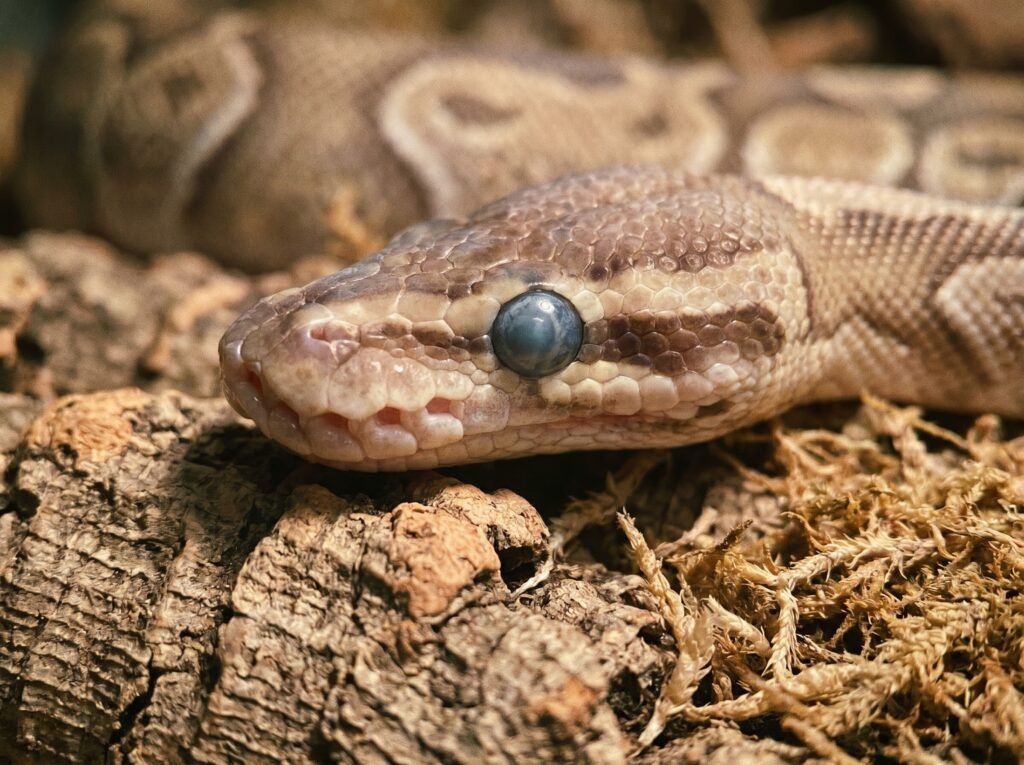
During shed, the snake's outer eye caps cloud over and its vision drops significantly. It is more defensive during this period, full stop. You will see the dull, milky coloring on the scales and the blue-gray tint to the eyes. Skip handling until the shed is completely done and the eyes are clear again.
New snakes need two full weeks with no handling before you start. The ExoPetGuides handling resource explains it well: the snake is recalibrating to a new thermal gradient, a new scent landscape, and a new level of background stress all at once. Patience during that window pays off in faster trust-building once sessions begin. Wait for the first successful meal, then give it a few more days before the first short session.
If your ball python is refusing food, behaving unusually, or showing any signs of illness, handling should stop until you have spoken with a reptile-specialist vet. That is not a husbandry call you make based on online research alone.
Reading stress signals, the do/don't handling table
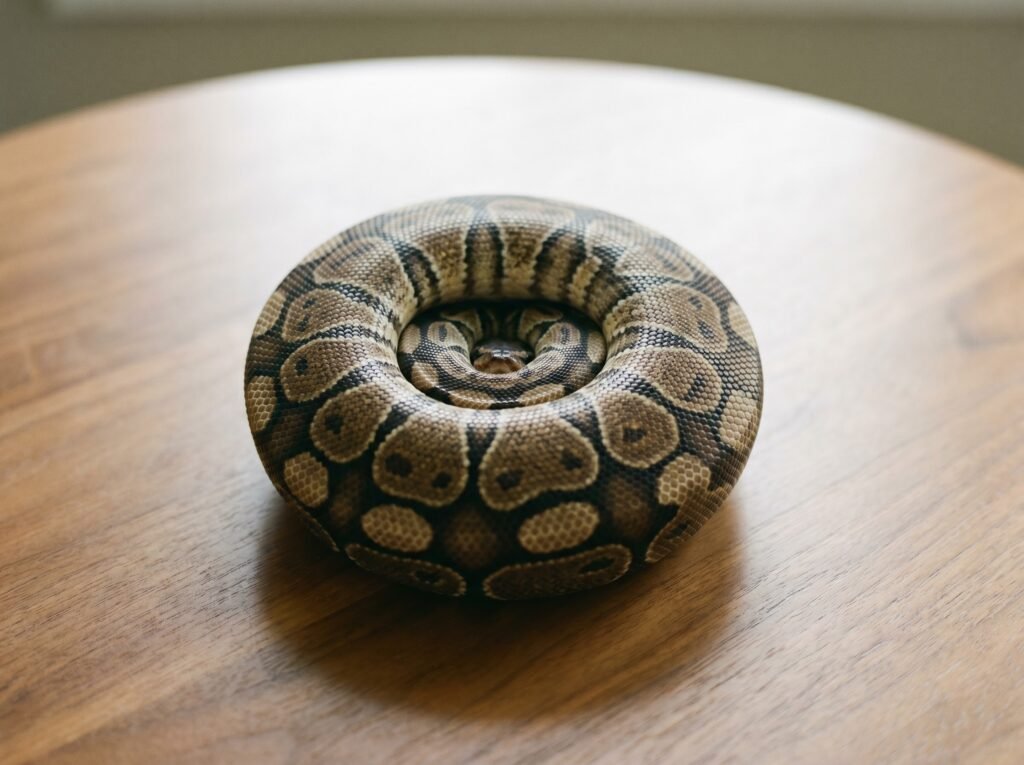
Ball pythons are not expressive animals, but they do communicate. The table below pairs the behaviors you might see with what they mean and the right response. Catching early signals before they escalate makes sessions better for everyone.
| What you see | What it means | What to do |
|---|---|---|
| Slow, steady tongue-flicking, relaxed body, exploring your hands | Calm and curious, good handling state | Continue; this is the goal |
| Tight, rigid body; head tucked; not moving | Mildly stressed or defensive | Keep the session short; end calmly without rushing |
| Tail vibrating or twitching rapidly | Early warning, irritation rising | Wind down and return to enclosure soon |
| Hissing; jerky, unpredictable movement | Clearly unhappy; escalating stress | End session now; place back gently |
| S-curve neck posture (head pulled back in S) | Strike is possible; high stress | Support body, move slowly, return immediately |
| Musking (foul-smelling discharge) | Stress limit reached | Return to enclosure; log what happened; shorten future sessions |
| Tight defensive ball with head buried | Fully shut down; done with handling | Place back immediately; do not force it open |
If a bite happens, stay calm. Ball python bites are not medically serious for a healthy adult, the teeth are small and curved backward for gripping prey, and they cause minimal tissue damage in a healthy adult. Do not yank your hand away, as that causes more tissue damage from the teeth than the initial contact. Stay still, and the snake will release. Clean the wound with soap and water. If the snake bites during handling rather than a feeding strike, take it as feedback: something about that session triggered a defensive response, and the next one should be shorter and calmer.
For a deeper look at bite causes and what they tell you about your snake's comfort level, see our article on do ball pythons bite.
Building trust over time
Ball pythons are not naturally social. They do not seek out handling the way a dog seeks out attention. What they can develop is tolerance that tips into genuine calm, a state where they explore your hands, rest their chin on your arm, and stay relaxed for the full session. Consistent, brief sessions over several weeks are what produce that result.
ExoPetGuides notes that most snakes show meaningful progress within four to eight weeks of regular, patient handling after the initial settling period. Short, frequent sessions build familiarity faster than long, infrequent ones. A five-minute session three times a week does more for trust than a 30-minute session once a week.
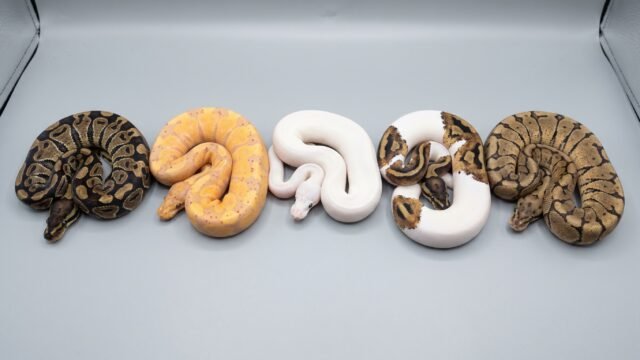
Some individuals take longer. Rescue snakes and wild-caught animals may need months of patient work. Certain morphs are also anecdotally more defensive than others, though the evidence is informal. If you have a particularly shy or defensive snake, the approach in our taming a ball python guide covers the step-by-step process for difficult cases.
The signal that it is working is simple: the snake stops balling up as soon as you touch it. When it stays loose, explores, and flicks its tongue steadily, you are there.